

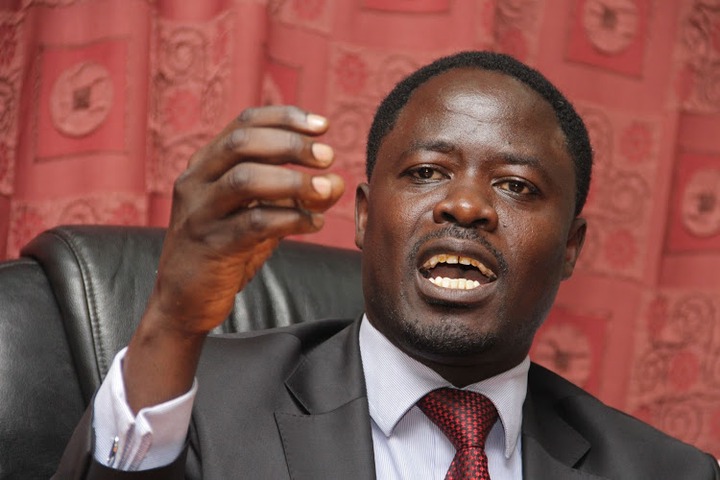
The political storm within the Orange Democratic Movement (ODM) has deepened after Senator Edwin Sifuna publicly read the memorandum of understanding (MoU) between ODM and President William Ruto’s UDA—a move that has sparked fierce backlash.
Homa Bay MP Peter Kaluma fired back, accusing Sifuna of failing to grasp that ODM is now part of the government, not the opposition. “Where is ODM in this presidential system where there is no opposition?” Kaluma questioned, exposing growing divisions within Raila Odinga’s party.
Supporters of Sifuna, however, have rushed to his defense. Augustine praised the senator’s intelligence and courage, stating, “He speaks truth to power without fear, not blind sycophancy.”
But critics like Frank Kamau argue that Sifuna is being used in a larger political game, warning that those who align too closely with power risk being discarded.
Meanwhile, former Interior CS Fred Matiang’i’s recent speech has stirred speculation about his 2027 ambitions. Aminga praised his unifying message, declaring, “Come 2027, Matiang’i is the choice.” This adds another layer of tension as ODM struggles to define its role in Kenya’s shifting political landscape.
The real question is whether ODM can survive this internal chaos. With some members pushing for closer ties with UDA while others demand a return to opposition-style resistance, the party risks losing its identity. Kaluma’s challenge—”If you can’t respect ODM, resign!”—highlights the deepening rift.
As 2027 approaches, ODM must decide: Will it remain a force in Kenyan politics, or will infighting and power struggles tear it apart? One thing is certain—the battle for control has only just begun.
By Kenyans