

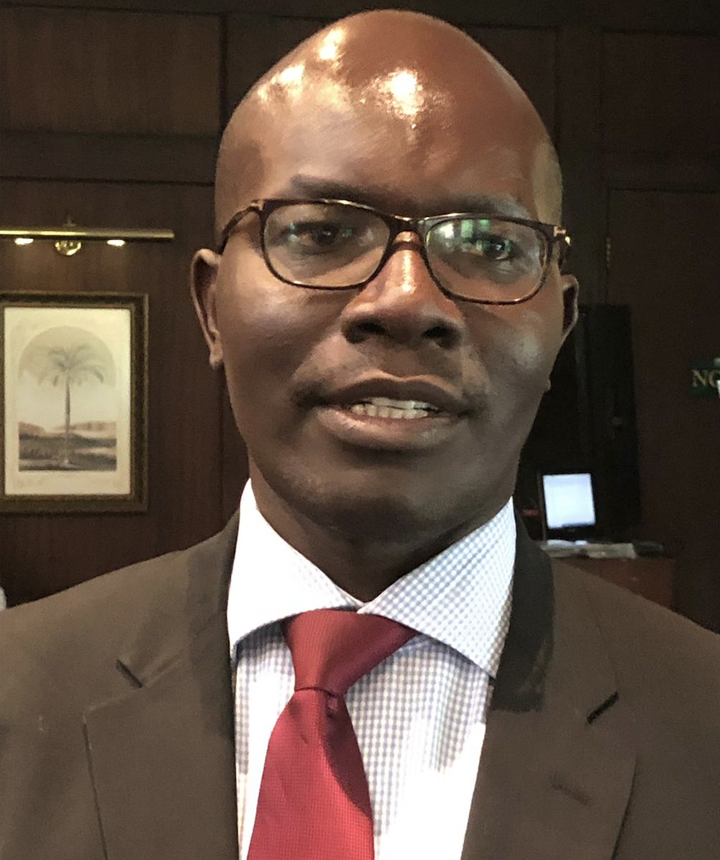
President William Ruto has reappointed Professor Collins Oloo Odote as chairperson of the Council of Legal Education (CLE) for another term, extending his leadership of the state agency responsible for regulating legal education and training in Kenya.
Prof Odote, an Associate Professor of Law at the University of Nairobi, was first appointed to the position in October 2023 for a three-year term. His reappointment comes as the council pursues reforms aimed at strengthening the regulation, quality assurance and accessibility of legal education in the country.
The legal scholar brings extensive academic and professional experience to the position, having built a career in legal research, university administration, governance and environmental law.
He holds a PhD in Law from the University of Nairobi and is an Advocate of the High Court of Kenya. He is also a member of the Law Society of Kenya, an arbitrator and a Fellow of the Chartered Institute of Arbitrators.
At the University of Nairobi, Prof Odote has served as Associate Dean of the Faculty of Law and Research Director at the Centre for Advanced Studies in Environmental Law and Policy.
His research interests include land law, environmental law, natural resource management and governance. He also serves as president of the Association of Environmental Law Lecturers in Africa, a continental network promoting research and capacity-building in environmental law.
Prof Odote’s renewed tenure comes at a significant moment for Kenya’s legal education sector, which is grappling with questions of training standards, institutional accreditation, access to professional education and the regulation of institutions offering legal programmes.
In September 2026, the Council of Legal Education handed two draft regulations to Attorney-General Dorcas Oduor, proposing changes to licensing, quality assurance and the Advocates Training Programme.
The proposed reforms seek to establish clearer training pathways, strengthen oversight of legal education providers and improve access to professional legal training while safeguarding the standards required of those entering the legal profession.
The council is mandated to regulate and supervise legal education providers, license institutions offering legal training and advise the government on matters relating to legal education and professional training.
Prof Odote’s reappointment therefore places him at the centre of an ongoing policy process with implications for universities, law students, professional training institutions and the wider administration of justice.
The implementation of reforms, the maintenance of academic standards and the need to balance wider access with professional competence are expected to remain important issues during his new tenure.