

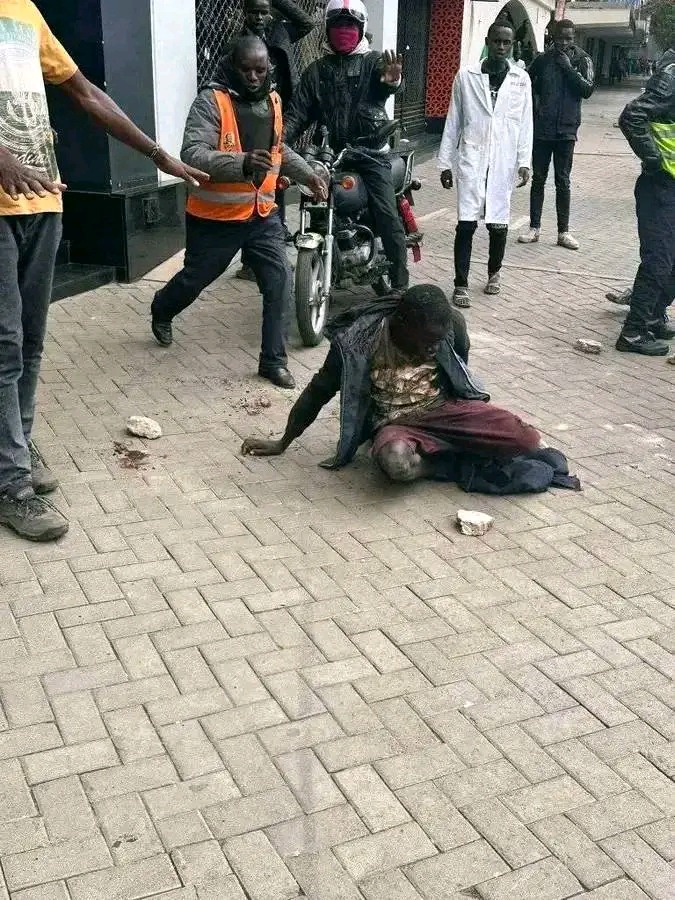
Tensions ran high in the Nairobi Central Business District (CBD) on Tuesday as peaceful protests demanding justice for slain blogger Albert Ojwang were marred by violence, goon infiltration, and police confrontations. Among those caught in the fray was prominent activist Hanifa Adan, who was allegedly assaulted during the chaos.
Hanifa, known for her vocal criticism of police brutality and the Kenya Kwanza administration, was left distraught after being attacked amid running battles between protesters and law enforcement. She claimed that a group of goons, riding motorcycles, infiltrated the protest and began harassing participants.
During a live media coverage of the demonstrations, Hanifa recounted how she was assaulted. “One of the goons beat me up and took my phone. I caught his jacket trying to get my phone back as he continued bodying me. Other people joined and caught up with him. I took my phone, and he got beaten up,” she stated.
Although she managed to retrieve her phone, the activist expressed deep concern over what she described as deliberate inaction by police officers on the ground.
“The police are watching as goons terrorise innocent people,” she claimed, adding that her assailant appeared to be acting with impunity.
The protests, which began as a peaceful march to the Nairobi Central Police Station, quickly descended into chaos as protesters were met with tear gas and force.
By midday, major streets including Moi Avenue had been brought to a standstill, with many businesses forced to shut their doors as tension escalated.
Eyewitnesses reported scenes of panic, with motorcycles weaving through crowds and targeting protesters. Many protesters accused security forces of colluding with hired goons to sabotage the movement seeking justice for Ojwang, whose mysterious death has sparked national outrage.
As investigations into the blogger’s death continue, activists are calling on the government to ensure the safety and rights of demonstrators, and to take immediate action against those who instigate violence in protest spaces.
By Kenyans