

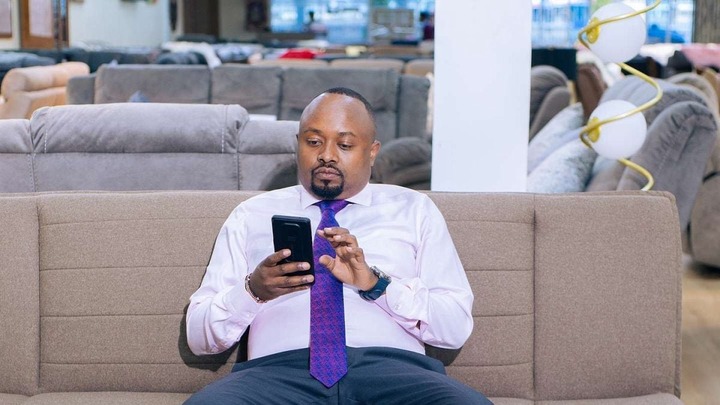
Kenyan comedian and content creator Wilson Muirani Gathoni, popularly known as Jaymo Ule Msee, is learning that making people laugh and making political statements are two very different games. The comedian, who built his popularity through humorous videos and commentary on everyday Kenyan life, has found himself facing a difficult relationship with an audience that once embraced his work.
His recent apology to Gen Z has brought back memories of the political controversy that placed him at odds with thousands of young Kenyans. In a statement shared on November 3, 2026, Jaymo admitted that his political ambitions and personal financial decisions had cost him deeply, both financially and professionally.
He also acknowledged that he had lost touch with the creative work that made people welcome him into their lives in the first place.
“I lost my way. Somewhere between the opinions, arguments, ego and political hallucinations, I lost touch with the creator you welcomed into your lives,” he said.
The admission marked a significant change in tone from the outspoken political commentator who had previously defended his positions even when they attracted criticism.
The June 25 remarks that angered Gen Z
One of the biggest controversies surrounding Jaymo followed the June 25, 2025, protests, when young Kenyans took to the streets to commemorate the first anniversary of the demonstrations against the Finance Bill 2024.
While many young people viewed the protests as a continuation of their demands for accountability, justice and better governance, Jaymo took a different position.
In a Facebook post, he compared the 2024 demonstrations with those held in 2025, describing the earlier protests as authentic and impactful while dismissing the anniversary demonstrations as fake and driven by tribal interests.
“25th 2024 – Authentic and Genuine Maandamano with Impact. 25th 2025 – Very Fake Maandamano with a tribal leaning with Zero Impact,” he wrote.
He went further, arguing that the 2024 protests brought together people from different communities, religions and social classes, unlike the 2025 demonstrations, which he claimed had taken an ethnic direction.
His remarks did not go down well with many young Kenyans, particularly those who considered the protests a tribute to people who had died during the previous demonstrations.
The backlash was swift. Critics accused him of dismissing the concerns of young people and questioned his political position. Some also pointed to his growing association with government figures.
Jaymo subsequently complained about the insults and criticism he was receiving. He also shared screenshots of missed calls from people he suggested were unhappy with his comments.
Defending government support
Jaymo did not initially retreat from his political position.
In an interview with YouTuber Kogi’s Corner on July 1, 2025, he argued that Kenyans had become intolerant of people who held different political opinions.
He maintained that supporting the government should not automatically make someone a sellout, arguing that citizens should be allowed to disagree without turning political differences into personal attacks.
He also defended his support for President William Ruto’s administration, saying he considered it patriotic to want the government to succeed.
“For me, I feel I am the one who is patriotic because I support the government, and I want it to succeed in its plans,” he said.
He criticised what he considered a political culture in which people who had previously supported the government were expected to reject it once their friends changed their positions.
His comments placed him at odds with a section of his audience that had strongly identified with the youth-led protests.
The comedian’s political involvement was not entirely new. He had previously worked in political campaigns and later pursued elective ambitions, including announcing plans to contest for the Nairobi Senate seat in the 2027 General Election.
In February 2026, he was also seen attending a UDA aspirants’ meeting at State House, shortly after announcing a political comeback.
The financial cost of political decisions
In his November 3, 2026 apology, Jaymo openly discussed the financial difficulties he says followed his political involvement.
“Today, I am super broke. My political choices and financial mistakes have cost me deeply. I cannot blame politics for everything when I made decisions too,” he admitted.
He also apologised specifically for his June 25, 2025 remarks, acknowledging that he had failed to give the pain and concerns of young Kenyans the respect they deserved.
The comedian appealed to his followers for financial support as he attempts to rebuild his life and return to content creation. He shared his M-Pesa and Paybill details, while encouraging those unable to contribute to support his work by watching and sharing his content.
He also announced a 20-episode project titled Inside the Life of a Prodigal Creator, scheduled to premiere on November 9, 2026.
Jaymo acknowledged that an apology alone would not restore public trust, saying he would have to demonstrate change through his actions.
5 lessons creators can learn from Jaymo’s experience
1. Know the audience that built your platform.
A creator’s popularity is often built on trust and relatability. When an audience feels that the person they supported no longer represents the values they connected with, that relationship can become strained.
2. Understand that political opinions have consequences.
Everyone has a right to express political opinions, but public figures must also understand that their positions can affect their professional relationships and public image.
3. Do not confuse popularity with political influence.
Having thousands of followers does not automatically translate into political support. People who enjoy comedy videos may not necessarily agree with the creator’s political views.
4. Separate personal beliefs from professional identity.
Creators who build careers around entertainment must understand that political commentary can change how audiences receive their work. Balancing both requires careful judgment.
5. Rebuilding trust takes more than an apology.
Public apologies can open the door to reconciliation, but consistency matters. Audiences will ultimately judge whether a creator’s actions match the promises made.
For Jaymo, the challenge now is to rebuild the creative connection that made his name familiar to Kenyans.