

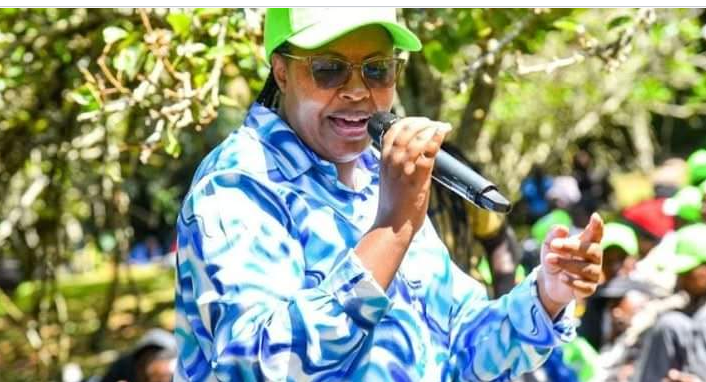
Kipipiri Member of Parliament Wanjiku Muhia has revealed that the Democracy for the Citizens Party (DCP) paid each of its polling agents Ksh8,000 during the recently concluded Ol Kalou parliamentary by-election, saying the party prioritized rewarding its grassroots teams.
Speaking during a television interview on Wednesday, July 29, Muhia said the amount paid to DCP agents exceeded what their rivals in the United Democratic Alliance (UDA) offered, dismissing claims that the party lacked the resources to manage a competitive campaign.
She maintained that paying agents fairly was essential to protecting the integrity of the election process and ensuring the party had committed representatives at polling stations throughout the voting exercise.
Muhia also disclosed that part of the campaign funds came from a public fundraiser that had originally been organized to help settle a fine imposed on her by the Independent Electoral and Boundaries Commission.
She explained that after the High Court suspended the penalty, the money was redirected to finance the party’s activities during the Ol Kalou by-election, allowing DCP to meet key campaign expenses, including payments to polling agents.
The by-election ended with DCP candidate Sammy Douglas Kamau Ngotho defeating his opponents to become the new Member of Parliament for Ol Kalou, marking a significant political victory for the party.
Ngotho was sworn into office on Tuesday, July 28, in a ceremony attended by senior DCP leaders, including Muhia and Nyandarua Senator John Methu, who joined supporters in celebrating the party’s latest electoral success.
Following the swearing-in, former Deputy President Rigathi Gachagua urged party members to end the celebrations and shift their attention to future political engagements, saying the victory should serve as motivation for the work ahead.
Gachagua argued that the Ol Kalou outcome reflects the changing political mood in the Mt Kenya region ahead of the 2027 General Election, insisting that past by-elections have accurately predicted voting patterns in subsequent national polls.
He cited the 2013 Kangema and the 2021 Kiambaa by-elections as examples, saying both contests foreshadowed broader regional support for the parties that later dominated the following general elections.
Source