

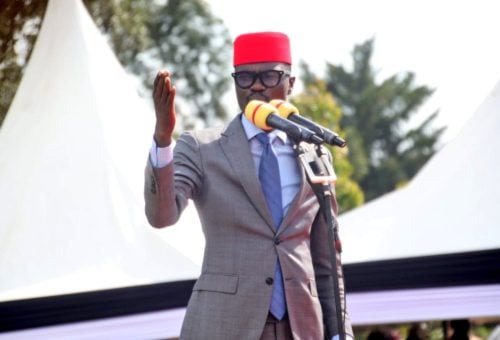
Kimilili Member of Parliament Didmus Barasa has offered a deeply reflective assessment of his political trajectory, drawing sharp comparisons between his own career and that of ODM Secretary General Edwin Sifuna.
Speaking during a high-energy regional engagement, Barasa addressed ongoing speculation regarding his political future and the shifting alliances across Western Kenya.
He used the comparison to highlight the distinct paths leaders take, emphasizing that political survival requires ideological consistency, grassroots connection, and steadfast loyalty to a national vision.
At the core of his address, Barasa firmly dismissed any suggestions that he might abandon President William Ruto, explaining why cutting ties with the current administration is entirely out of the question for him.
He pointed out that his political growth has been closely intertwined with the ruling coalition’s broader agenda for national development and regional empowerment.
For Barasa, remaining loyal to President Ruto is not merely a matter of convenience, but a strategic imperative required to secure tangible development projects for his constituents in Kimilili.
The outspoken lawmaker contrasted his political philosophy with opposing figures like Sifuna, arguing that effective leadership demands working closely with the government of the day rather than engaging in perpetual opposition politics that yield little fruit for local communities.Edwin Sifuna, the Senator of Nairobi Speaks during a Linda Mwananchi rally on Saturday, July 18, 2026. PHOTO/https://web.facebook.com/EdwinWSifuna
His candid remarks underscore the fierce competition for political supremacy in Western Kenya, where leaders from various political divides are constantly positioning themselves for future electoral dominance.
By anchoring his loyalty firmly to the ruling establishment, Barasa seeks to solidify his standing as a dependable kingpin in the region.
Ultimately, Didmus Barasa’s public declarations provide a fascinating window into the complex calculations driving modern Kenyan political realignments.
As leaders navigate shifting voter sentiments and regional expectations, defining one’s political journey and alliances remains paramount.
By boldly explaining his refusal to ditch President Ruto, Barasa ensures that his voice remains a dominant and polarizing force in the ongoing national conversation ahead of upcoming democratic contests.