

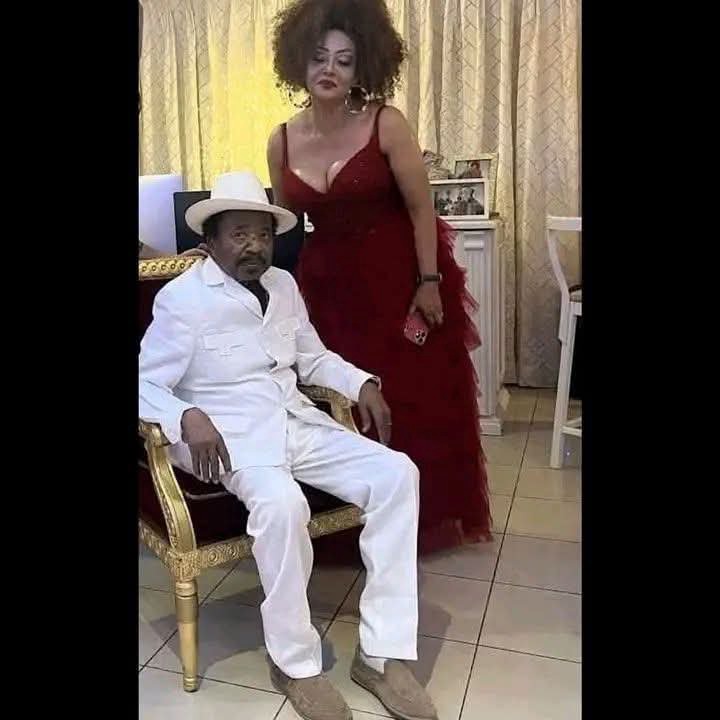
For years, Cameroon’s long-serving President Paul Biya has maintained a highly unusual pattern of governance—spending extended periods outside the country while continuing to lead the Central African nation from abroad.
The 93-year-old president has been residing in Switzerland with his family, according to reports, with Geneva becoming a familiar base for the veteran leader. His prolonged absence from Cameroon has repeatedly generated speculation about his health, his ability to govern and the future of the country under his leadership.
Biya, who has ruled Cameroon since 1982, rarely returns home unless circumstances require his physical presence at an important national event.
One of the most dramatic moments came in 2024, when rumours swept across Cameroon and social media that the president had died. The speculation grew so intense that Biya eventually appeared in public after returning to the country, effectively putting the rumours to rest.
His appearance was brief but significant. He was seen in public, interacted with officials and posed for photographs, giving his supporters an opportunity to see for themselves that he was alive. Soon afterwards, however, he returned to Switzerland.
The following year, Biya once again travelled back to Cameroon, this time ahead of the country’s presidential election. He spent about a month in the country campaigning before returning to Geneva after the campaign period.
After being declared the winner of the election, Biya made another return to Cameroon—this time for his swearing-in ceremony as he began another term in office.
But even that stay was short-lived.
Once the inauguration ceremony was concluded, the veteran president reportedly departed Cameroon and returned to Switzerland, where he has continued to spend much of his time.
Now, his government is facing another moment of heightened attention following reports of a major reshuffle within the country’s military establishment.
According to the claims, the decision was prompted by intelligence reports pointing to an alleged plot to overthrow the government.
The reported military shake-up has therefore attracted considerable interest, with questions being raised about what information may have reached the presidency and whether authorities believe elements within the security establishment could pose a threat to the government.
The alleged coup intelligence, however, remains a sensitive matter, and the identities of those supposedly involved and the precise nature of the alleged plan have not been publicly established in full.
What makes the development particularly striking is that it comes while Biya is once again governing from outside Cameroon.
For supporters, his presence in Switzerland does not diminish his authority as president. For critics, however, his prolonged stays abroad have continued to fuel debate about leadership, succession and the direction of the country.
Biya’s extraordinary political journey has made him one of Africa’s longest-serving leaders. Having been in power for more than four decades, his presidency has outlasted several generations of Cameroonians and witnessed enormous political and social changes.
Yet his increasingly unusual governing routine—returning home for major political moments before heading back to Switzerland—continues to attract attention.
With a military reshuffle now reportedly underway following alleged intelligence about a possible coup, the spotlight has once again turned toward Yaoundé.
The immediate question is whether the shake-up is simply a routine reorganisation of the security establishment or part of a broader effort to protect the government from a serious internal threat.