

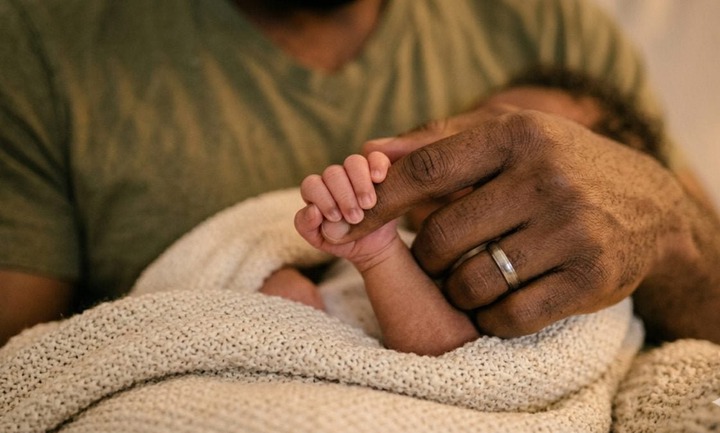
Newborn babies often attract attention from family members, friends and visitors who are eager to hold, cuddle and kiss them. While these gestures are usually expressions of affection, kissing a newborn on the face can expose the baby to infections that may cause serious health complications.
This is because newborns have developing immune systems, making it harder for their bodies to fight infections compared with older children and adults.
Even people who appear healthy may carry viruses and bacteria that can be transmitted through close contact, saliva and respiratory droplets.
Some infections that cause mild symptoms in adults can become dangerous when passed to a newborn, particularly during the first few weeks of life.
Here are reasons parents should discourage visitors from kissing their newborn babies on the face.
1. Risk of herpes simplex virus infection
One of the major concerns is the herpes simplex virus, which causes cold sores around the mouth.
A person with an active cold sore can transmit the virus through kissing, potentially exposing a newborn to neonatal herpes.
According to the NHS, neonatal herpes is rare but can be very serious, particularly because the infection can affect a baby’s skin, eyes, mouth, brain and other organs.
In severe cases, it can spread throughout the body and become life-threatening.
People with cold sores should avoid kissing newborn babies and maintain good hand hygiene.
2. Exposure to respiratory infections
Kissing a newborn on the face brings an adult’s mouth and respiratory secretions close to the baby’s nose and mouth.
This can expose the child to respiratory infections, including respiratory syncytial virus (RSV), influenza and other viruses.
RSV can cause bronchiolitis, an infection that affects the small airways in the lungs. Young infants are particularly vulnerable to severe illness.
Parents should therefore discourage people with coughs, sneezing, runny noses or other signs of illness from having close contact with their newborn.
3. Risk of serious bacterial infections
Newborn babies can also be exposed to harmful bacteria through close contact with other people.
For example, Group B Streptococcus (GBS) can cause serious infections in newborns, including pneumonia, bloodstream infections and meningitis.
Although GBS is commonly transmitted from mother to baby around childbirth, newborn infections can have different sources.
Good hygiene and appropriate medical care are important in protecting babies from potentially serious infections.
4. A newborn’s immune system is still developing
Unlike older children and adults, newborns have immune systems that are still developing.
Although babies receive some protective antibodies from their mothers during pregnancy and through breast milk, this protection does not prevent every infection.
As a result, illnesses that may cause mild symptoms in adults can lead to serious complications in young infants.
This is why parents are encouraged to limit unnecessary exposure to people who may be carrying infections.
5. Kissing can expose babies to germs through saliva
An adult’s mouth naturally contains bacteria and other microorganisms.
Kissing a newborn on the lips, cheeks or around the mouth can transfer saliva and expose the baby to germs.
Even when someone has no visible signs of illness, they may still carry and transmit certain infections.
Visitors should avoid kissing newborns, particularly around their faces and hands, which babies frequently put into their mouths.