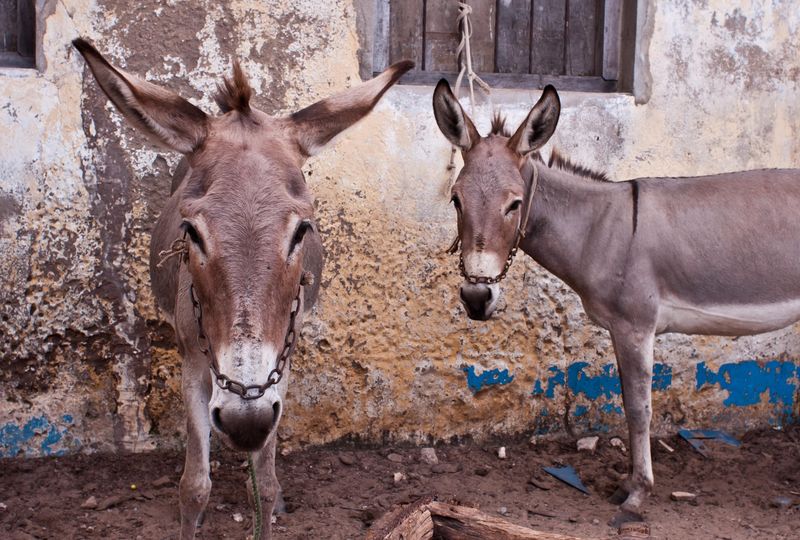
The number of donkeys in the country is dwindling at an alarming rate with illegal slaughter and poor breeding methods blamed for the crisis.
This comes in the wake of increased cases of illegal slaughtering of the animals in the last couple of weeks rendering tens of families jobless.
According to Dr Raphael Kinoti from Brooke East Africa, the trend was worrying, noting that the meat was unsafe for human consumption.
“In the last couple of weeks, we have seen an upsurge in the cases of illegal donkey slaughter and this means the presence of uninspected meat and depriving family’s source of livelihood,” he said.
Speaking in Naivasha, he praised the move to close all donkey abettors noting that they were operating in the country as this was a major threat to the number of donkeys in the country.
He said that between 2016 and 2021, the country lost a whopping 300,000 donkeys to the slaughterhouses adding that it would take four years to replace them.
“The breeding of donkeys is challenging and we thus need to protect the current numbers as there are fears of extinction,” he said.
Meanwhile, the construction of phase one of the Hell’s Gate ward slaughterhouse in Naivasha sub-county is 95 per cent complete.
The construction of the main house, offices, manure shed, borehole, holding pen, drainage system, lagoons, toilets, perimeter wall, and blood tanks are complete.
The Sh20m facility is set to be operational in the coming months once the carcass hoists, electricity and water pump are installed.
According to the Chief Officer for Livestock in Nakuru County, Dr Enos Amuyunzu, the slaughterhouse had immense potential to produce meat for revenue.
He noted that once completed an estimated 100 cattle, and 150 heads of goats and sheep would be slaughtered in a day.
“This facility has the capacity of supplying meat for the whole region and the daily slaughters will translate to over Sh8.7m for cattle and Sh600,000 for sheep and goat in revenue,” he said.
Amuyunzu told the stakeholders that the county was committed to facilitating projects and programs that improve livestock production development in the county.
He added that the next phase included the installation of solar-powered systems and a cold room for the preservation of meat.
“We expect this slaughterhouse to be operational in the coming months and we shall have to close the one in Naivasha town,” he said.
https://classic105.com/why-donkeys-in-naivasha-are…/