

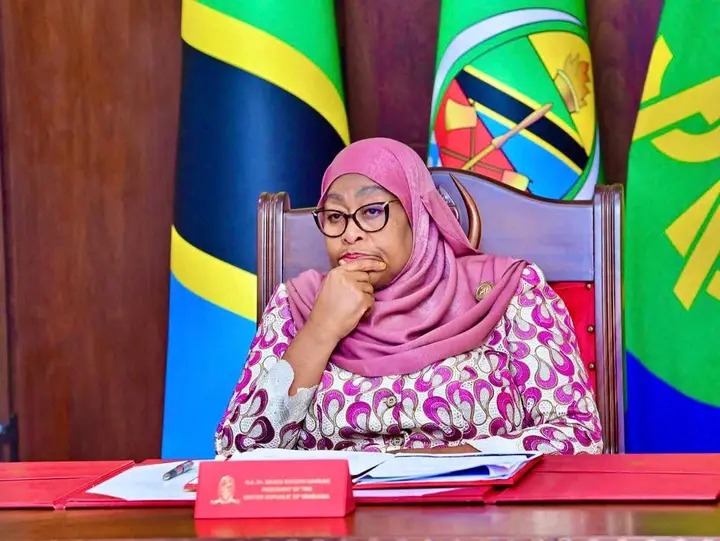
Tanzanian “President” Samia Suluhu has announced an inquiry commission to look into the election violence while releasing a few detained protesters and calling them misled youths. These acts appear soft on the outside but the deeper reality shows a government trying to manage public anger and international pressure without accepting real responsibility.
A commission that reports to the same leader accused of wrongdoing cannot deliver the truth. It cannot protect witnesses. It cannot expose the actions of security agencies that answer directly to the state. History has shown this pattern many times in Africa and beyond. When governments set up internal inquiries, they often manage the outcome long before the hearings even begin.
One of the greatest dangers lies with the people who may try to testify honestly. When the same state that carried out the violence is allowed to run the investigation, witnesses become targets. Tanzania is not immune to this risk and the region has seen similar tragedies before and we know from our heart of hearts that Tanzania could be worse.
Kenya provides painful lessons. The world remembers the International Criminal Court process after the post election violence. Key witnesses either disappeared or died under suspicious circumstances. People who were ready to speak lost their lives. Some were attacked. Some fled the country. Others withdrew completely out of fear. The truth was weakened because those who carried it were never protected. A state linked to violence cannot guarantee the safety of those who expose it.
Other African nations have followed the same pattern. In Zimbabwe, activists who attempted to report security force abuses vanished. In Uganda, families still search for relatives who were last seen in military custody. In Ethiopia, witnesses to massacres were threatened into silence. Whenever the state is both the accused and the investigator, people who know the truth face danger.
This is why the sudden generosity of releasing protesters in Tanzania must be examined carefully. The government is portraying them as misguided youths instead of victims of repression. This removes legitimacy from their grievances. It makes the protests look like confusion rather than a national demand for justice. It prepares the ground for the inquiry to dismiss the seriousness of the unrest and to blame shadowy influences instead of state violence.
The push for an inquiry is also linked to a deeper legitimacy crisis. Many Tanzanians and several international observers believe the election was not fair. The victory figures were unbelievable. Protests spread across towns. Security forces operated with frightening freedom. Media spaces were restricted. After such an election, the government now wants to appear open and responsible. The commission and the releases are tools to shape a new image rather than confront the truth.
Legitimacy can never come from a controlled process. It comes from transparency, independence and courage. It comes from protecting witnesses and preserving evidence. It comes from a willingness to face uncomfortable truths rather than hiding them.
This is where the United Nations, the African Union and major governments must reflect on their own history of delay. When action is slow, regimes clean up the mess just like what Suluhu is trying to do.
Rwanda showed the world how quickly facts disappear if early steps are not taken. Sri Lanka demonstrated how witnesses can be silenced when the state controls the narrative. Kenya proved that even with international involvement, witnesses can die if the accused still controls the security machinery. In every one of these cases the world waited too long and the truth suffered.
Right now Tanzania is moving faster than the international community. The government is shaping the story before the world decides how to respond. Every day that passes gives the regime more time to pressure witnesses, destroy evidence and rewrite the events. This inquiry is not cooperation. It is a shield yet we saw people butchered, bodies lying all over…most butchered in their home, even kids!
Ireland and Denmark have already supported the UN Human Rights Commissioner in calling for an independent investigation. Their voices are important but they must be followed by real pressure. Only a strong external process can protect those who know the truth. Only a truly independent mechanism can prevent a repeat of tragedies seen in Kenya and other countries.
Tanzanians deserve a justice system that does not silence witnesses. They deserve a truth that cannot be edited. They deserve a future built on accountability rather than controlled narratives.
By Creatorhub