

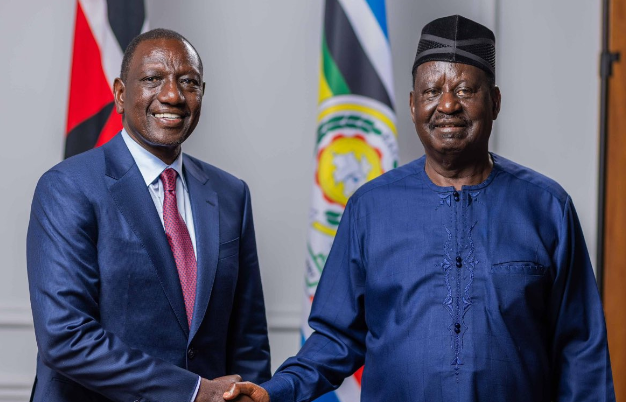
President William Ruto’s recent tour of Central Kenya was met with large, cheering crowds, surprising many who expected a less welcoming reception.
According to The Sunday Standard, locals were paid between kshs 300 and kshs 10,000 to line the roads and fill markets during the President’s visit.
Boda boda riders from different areas received varying amounts, with some getting Kshs h 1,500 and others kshs 1,000.
This raised questions about whether the crowds were genuine or financially motivated.
Kileleshwa MCA Robert Alai reacted strongly to the report on social media platform X (formerly Twitter).
He dismissed claims that the crowds were bought, arguing that mobilisation is a normal part of political events.
“I am a politician. Where do you not mobilize 10% to create excitement for the other 90% to attend a political function?” Alai wrote.
“There is a reason you have to mobilize. Doesn’t mean you bought a crowd. Even billionaires can’t buy the thousands in rallies. This is a stupid headline.” He added.
Alai suggested that paying a small portion of attendees is a common strategy to encourage larger turnout, not an attempt to fake support.
He insisted that no amount of money could realistically buy the massive crowds seen at political rallies.
President Ruto’s supporters say the payments were simply facilitation for those who took time off work, while critics see it as a way to manipulate public perception.
While payments at political rallies are not new, the discussion highlights the fine line between mobilisation and manipulation.
Robert Alai’s defence reflects a common political strategy, but the controversy raises questions about transparency in public gatherings.
By Newshub