

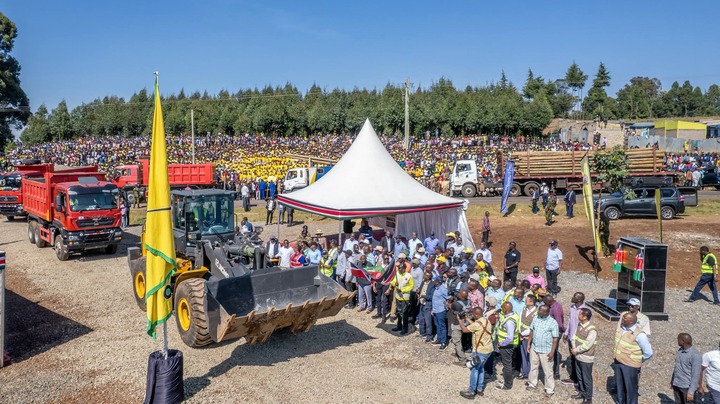
President William Ruto has launched the construction of the 53-kilometre Sabunit–Kapkondor/Furaha–Hill Tea Access Road, a project expected to improve transport and economic activities in the surrounding communities.
The road is important because it serves areas where farming is a major source of income. For tea farmers, reliable roads can make it easier to transport green leaf from farms to collection centres and factories. Better roads can also reduce delays and transport costs.
The launch comes at a time when many rural communities are calling for improved infrastructure to support local development. Although roads may appear to be simple projects, their impact can extend far beyond transportation.
A properly constructed road can connect farmers to markets, schools, health facilities and other essential services. It can also create opportunities for small businesses operating along the route.
For residents, the project could therefore represent more than a new stretch of tarmac. It could provide a stronger connection between villages and larger economic centres, while making movement easier during both dry and rainy seasons.
The involvement of the national government also places responsibility on the relevant authorities to ensure that the project is completed within the expected standards and timelines. Kenyans have increasingly demanded that infrastructure projects deliver real value rather than becoming endless construction sites.
There is also an opportunity for local communities to benefit from employment and business opportunities during construction. Young people and local enterprises can participate where suitable opportunities arise.
However, the success of the project should ultimately be measured by what residents experience after completion. A durable road, proper drainage and regular maintenance will be necessary to protect the investment for many years.
President Ruto’s launch is therefore a significant step, but the real test will be completion and quality. Rural infrastructure should not only be announced; it should be delivered and maintained.
For tea farmers and other residents along the route, the hope is that the 53-kilometre project will reduce transport challenges and unlock new economic opportunities.