

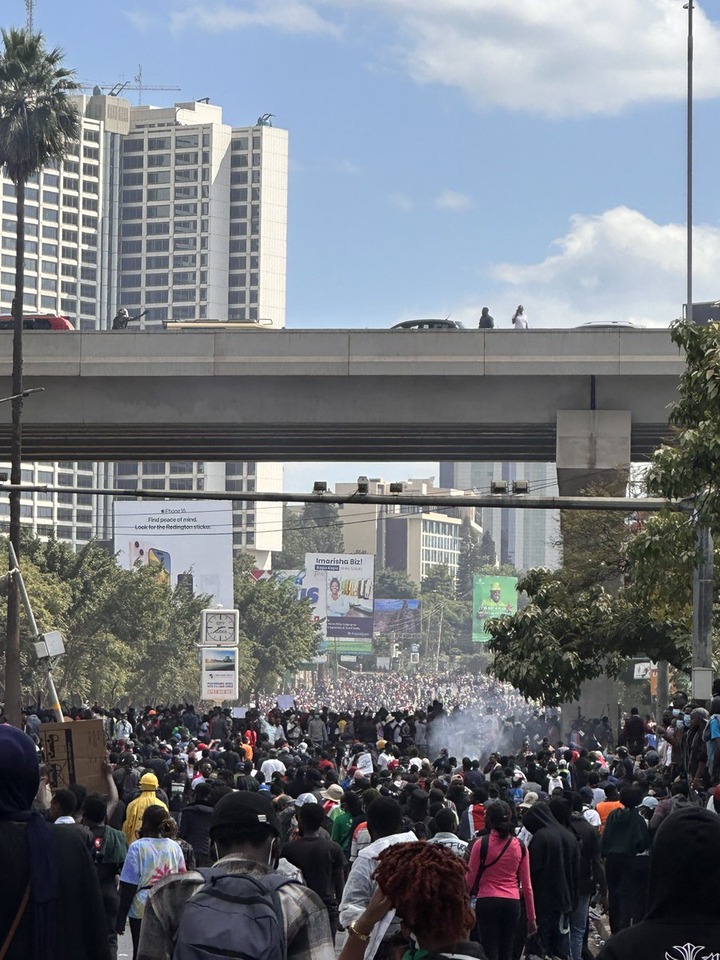
A tense confrontation between Nairobi County enforcement officers and a traffic police officer caused a stir in Nairobi’s Central Business District (CBD), drawing the attention of pedestrians, motorists, and traders who stopped to witness the unfolding drama.
The incident, which occurred in broad daylight, disrupted the normal flow of traffic as the officers engaged in what appeared to be a heated exchange while carrying out traffic control duties. Videos and photos circulating on social media captured the visibly animated confrontation, with members of the public gathering around to watch as the disagreement escalated.
Although the exact cause of the altercation remains unknown, the confrontation appeared to stem from a dispute over traffic management responsibilities. At one point, the officers could be seen exchanging words in raised voices, attracting curious onlookers and briefly creating congestion along the busy street.
Despite the tense moments, there were no reports of physical violence or injuries. The situation was eventually brought under control, allowing traffic to resume its normal flow as the crowd gradually dispersed.
The incident has since sparked widespread discussion online, with many Kenyans expressing concern over the public disagreement between officers from different government agencies. Others questioned whether there is sufficient coordination between Nairobi County enforcement teams and the National Police Service when managing traffic within the city.
Traffic management in Nairobi’s CBD often requires close cooperation between county askaris and police officers, particularly during peak hours when congestion is at its worst. Public disagreements between the two agencies are relatively uncommon, making the incident particularly noticeable to residents and commuters.
As of the time of publication, neither Nairobi County nor the National Police Service had issued an official statement explaining what triggered the confrontation. The circumstances surrounding the disagreement therefore remain unclear, leaving many awaiting clarification from the relevant authorities.