

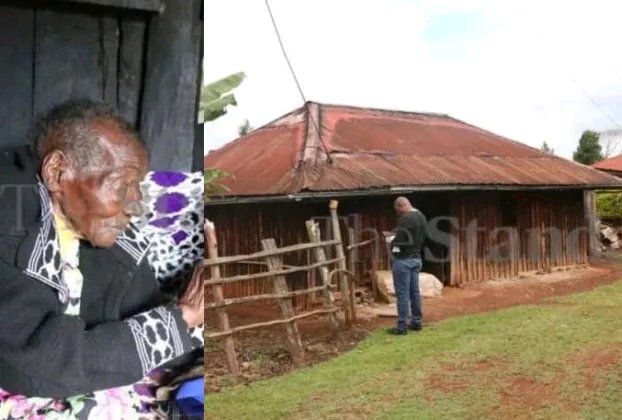
For many Kenyans, the name Esther Waitherero holds a special place in history—not because she held political office or lived a life in the public eye, but because she quietly witnessed more than a century of Kenya’s transformation. As the elder sister of former President Mwai Kibaki, Waitherero’s long life mirrored the country’s own journey, from the colonial era to modern-day Kenya. Her astonishing lifespan of 115 years became a symbol of resilience, dignity, and the power of humble living.
Born in the early 1900s, long before Kenya became a republic, Esther Waitherero grew up in an era where life in the rural villages of Nyeri was defined by simplicity, hard work, and deep communal bonds. She belonged to a generation that experienced the profound cultural shifts brought about by colonial rule, the struggle for independence, and the later decades of development and political change. Through it all, she remained grounded in her traditions and devoted to her family.
Waitherero was widely admired for her sharp memory and remarkable clarity of mind. Even in old age, she could recount events from her childhood with impressive detail, often surprising younger generations who visited her to hear stories about the past. She was known for her warmth, her sense of humour, and her ability to make every visitor feel at home. In many ways, she was a living archive—a bridge connecting the old Kenya to the new.
Despite her advanced age, she remained a central figure within her family. To her siblings, she was a source of wisdom; to the wider community, she was a symbol of longevity and strength. While her brother, Mwai Kibaki, rose to national prominence—ultimately becoming Kenya’s third President—Waitherero continued to live a simple, quiet life anchored in her deep cultural roots.
Her longevity sparked curiosity across the country. Many wondered how she managed to live so long, and those close to her often attributed it to her calm nature, active lifestyle, and traditional diet. She rarely worried about material things and maintained a peaceful outlook on life, which her family believes contributed significantly to her long and healthy years.
In her final years, she became a cherished matriarch whose presence brought together multiple generations. She lived long enough to witness historical milestones such as Kenya’s independence, the introduction of multiparty politics, the advent of technology, and significant social changes that reshaped the nation. Few people experience such an extensive span of history within one lifetime.
When she eventually passed on at the age of 115, her community mourned not just a beloved elder but also a living link to Kenya’s early decades. Tributes described her as a blessing—a woman whose long life reminded the nation of the value of heritage, family unity, and the quiet strength of those who came before.