

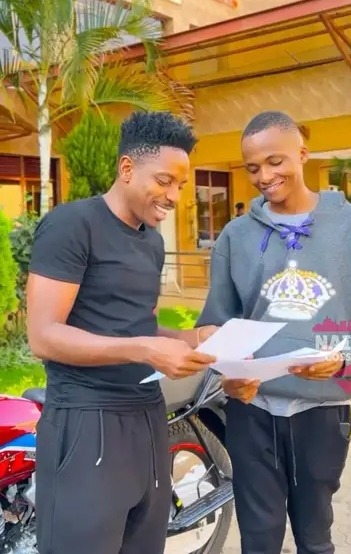
In a country where many artists struggle to make ends meet, acts of generosity often spark wider conversations than the gift itself.
When comedian Eric Omondi surprised Gengetone artist Shalkido with a brand new motorbike and bags of household shopping, Kenyans quickly shared their feelings online. Should such gestures be celebrated as pure kindness, or questioned for the lessons they leave behind?
Eric’s support included essential shopping such as unga, sugar, and cooking oil, alongside the motorbike, which many saw as a chance for Shalkido to build something sustainable. .
The move, which spread widely after being shared on Facebook, quickly attracted admiration from fans who felt the comedian had once again shown leadership outside comedy.
Some Kenyans expressed admiration so strong that they even suggested Eric should consider political leadership. To them, his consistent support for struggling youth made him stand out compared to traditional politicians.
They argued that if he ever vied for a seat, he could easily beat established names because he connects directly with the people.
Not everyone, however, saw it in the same light. A different group felt that giving free things might reduce a person’s motivation or weaken their ability to think independently.
According to this view, while help is good, overdependence on handouts could eventually limit someone’s growth. This reflection showed how divided opinions can become, even when the intention behind an act is kindness.
The discussion surrounding Eric’s gift highlighted a bigger question for society: what is the balance between helping someone rise and allowing them to build their own resilience?
It also reminded Kenyans of how much influence celebrities hold, as their actions often spark debates that go beyond entertainment.
In the end, Eric’s gesture to Shalkido may have been about a motorbike and shopping, but to Kenyans it turned into a conversation about leadership, support, and the real meaning of empowerment.
By Newshub