

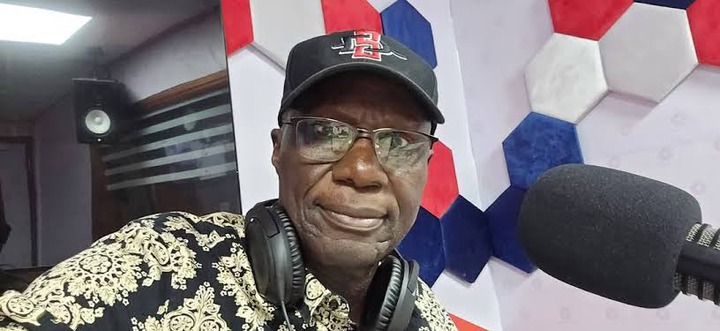
Veteran radio presenter Fred Machoka took the stand this week in a Nairobi court, delivering deeply personal testimony about how a single Facebook post by Kileleshwa MCA Robert Alai shattered his reputation and caused immeasurable damage to his brand.
The broadcasting icon, who has spent nearly five decades behind the microphone, told the court that the allegations were not only false but had stripped him of his dignity as a public figure, a father and a grandfather.
Machoka filed the defamation lawsuit in June 2025, seeking KSh 60 million in damages after Alai allegedly published a Facebook post in May 2025 claiming the veteran presenter was HIV positive and taking ARVs that were affecting his mental clarity. The case is before a Nairobi court, where Machoka is represented by advocate Danstan Omari.
Testifying before the court, Machoka explained that the allegations struck at the very foundation of everything he had built over a career spanning nearly half a century.
He noted that his name is not merely a personal identity but a commercial brand attached to multiple business interests, event hosting contracts and media engagements that collectively represent a net worth he estimates at over KSh 250 million.
“I felt defamed when he went on his Facebook account alleging that I am HIV positive and I am taking ARVs which are making me irrational in thinking,” Machoka told the court. “I am a media personality, I will be 50 years in broadcasting in September. I also host various events, I have been a master of ceremony in various national and international events, hosting international figures, even Kenya at 50 where there were 19 presidents in attendance.”
Legal observers following the case noted that Machoka’s testimony painted a vivid picture of the real world consequences of irresponsible social media conduct, particularly when directed at individuals whose livelihoods depend on public trust and personal reputation.
A court source familiar with defamation proceedings observed that cases involving public figures and unverified health disclosures are increasingly common and carry serious legal consequences under Kenyan law.
Alai, for his part, responded to the lawsuit by disowning the Facebook page on which the posts appeared, claiming in his court filings that he does not own or operate any social media account under his name or a pseudonym. He further stated that he has never met or heard of Machoka.
In response, advocate Omari told the court that while his client remained open to an out of court settlement, meaningful negotiations cannot proceed with a party that denies being the correct respondent.