

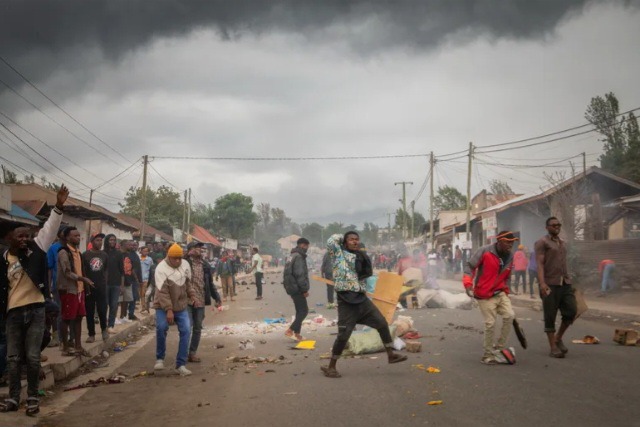
On what should have been a joyous celebration of Tanzania’s 64th Independence Day the bustling streets of the commercial capital lay eerily quiet.
Markets stood empty traffic was sparse and police patrols dominated the landscape as captured in footage shared by BBC Swahili from areas like Gongo la Mboto.
The government had banned planned anti-government protests labeling them unlawful and tantamount to a coup attempt.
Authorities urged citizens to stay indoors unless absolutely necessary canceling official celebrations to redirect funds toward repairing damage from post-election unrest in October.
Heavy security deployments including roadblocks and military presence were visible across major cities like Dar es Salaam, Mwanza and Arusha.
This tense atmosphere stems from lingering anger over the October 29 elections marred by allegations of fraud opposition disqualifications and a brutal crackdown that reportedly killed hundreds and led to thousands of arrests.
Activists called for peaceful demonstrations on Uhuru Day to demand accountability and reform but widespread fear of reprisals kept most Tanzanians at home.
While some youth campaigns on social media like #YouthsAgainstViolence, rejected protests in favor of peace and development, scattered reports of small gatherings emerged quickly dispersed by forces.
President Samia Suluhu Hassan marked the day with messages emphasizing unity and progress but the subdued mood underscored deep divisions.
As Tanzania reflects on its hard won freedom from colonial rule today’s silence speaks volumes a nation grappling with the boundaries of democracy where celebration gives way to caution amid calls for change.
By Nairobinews