

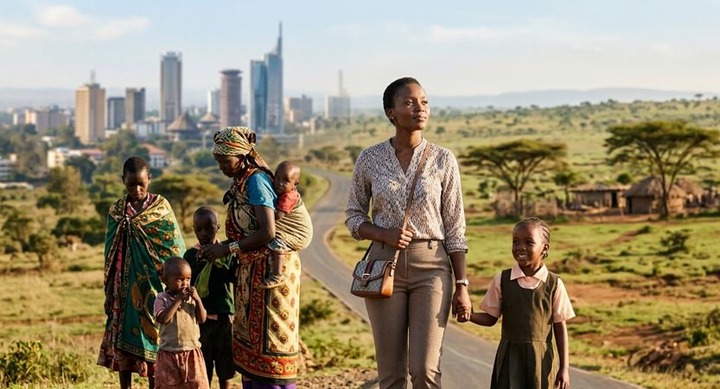
Kenya’s fertility rate has continued to drop over the past two decades, with women having fewer children on average across the country, according to the newly released Kenya Mini Demographic and Health Survey 2025/2026.
Findings from the Kenya National Bureau of Statistics (KNBS) show that women recorded an average of 3.1 births in 2025, dropping from 3.4 births per woman in 2022. The data underlines an uninterrupted downward trajectory that the agency has tracked since 2003.
Geography plays a significant role in family size, creating a stark divide between regions. Women in rural areas registered an average of 3.6 births, compared to 2.6 births among women living in urban centers.
Regional variations across counties show an even wider gap. Mandera recorded the country’s highest average at 6.8 births per woman, followed closely by Wajir at 5.8, Tana River at 5.7, Turkana at 5.6, and Garissa at 5.3.
On the other end of the spectrum, Embu recorded the lowest average in Kenya at 2.2 births per woman, followed by Kiambu and Mombasa, both at 2.3. Nairobi and Kericho each recorded 2.6 births per woman, while Kirinyaga and Tharaka Nithi registered 2.7.
KNBS calculated these national and regional fertility rates by analyzing detailed pregnancy histories from women aged 15 to 49.
“Of all pregnancy outcomes in the 3 years before the survey, 89% resulted in live births, 9% in miscarriages, 1% in stillbirths, and less than 1% in induced abortions,” the survey found.
Demographic analysts attribute this shift to changing lifestyle choices, extended education, and delayed family planning. KNBS noted that variables such as a woman’s age, spacing between births, and natural conception limits directly impact total births.
“Postponing first births and extending the interval between births have played a role in reducing fertility levels in many countries,” KNBS stated in the report.
Adolescent Births Fall Nationally, but Hotspots Remain
Mirroring the general drop in overall fertility, teenage pregnancy rates have declined across the country. The survey recorded a reduction in adolescent births, dropping from 73 to 63 births per 1,000 girls.
Despite national progress, several counties continue to report elevated teenage pregnancy rates. West Pokot topped the list with 25% of adolescents reporting pregnancy, followed by Migori at 23% and Kajiado at 20%. Conversely, Nyeri recorded the lowest teenage pregnancy rate in the country at just 2%, while Isiolo and Makueni registered 3.4% and 3.7%, respectively.
Beyond birth rates, the survey highlighted broader public health improvements. Health facility deliveries rose over the five years preceding the survey, coinciding with a sustained two-decade drop in child mortality rates nationwide.