

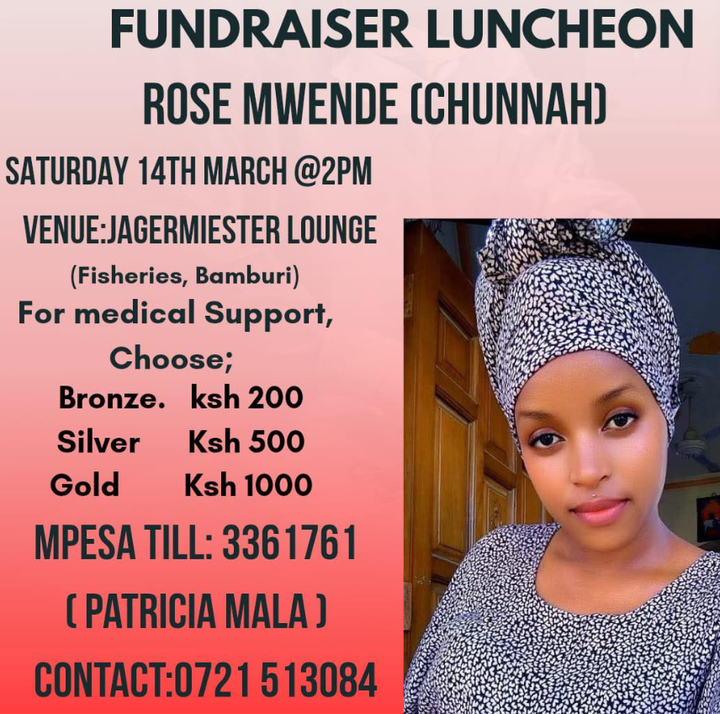
Roselyn Ashanti Mchuna, popularly known as Chunna, is receiving care from her mother after a medical crisis that began during her birthday celebration in Mombasa on February 14, 2026.
The entrepreneur, who operated Airbnb properties in several towns, suffered severe brain damage following the incident, leaving her dependent on family support for her daily needs.
Birthday celebration takes a tragic turn
Friends and loved ones had gathered to celebrate Chunna’s birthday when the occasion took an unexpected turn. She collapsed during the event and was rushed to hospital after consuming a poisonous substance.
The incident marked the beginning of a medical crisis that significantly changed her life, leaving her with severe brain damage and in need of ongoing care.
Months in intensive care
Chunna spent several months in intensive care as her condition worsened. Doctors described her as having suffered approximately 50 per cent brain damage.
She was left unable to speak, walk, see or eat independently. The effects have changed her daily life and increased the support she needs. Her diagnosis and the extent of her brain damage are important in understanding the care required after such a crisis.
Before the incident, Chunna was an entrepreneur who operated Airbnb properties in Mombasa, Nairobi and other towns. Managing short-term accommodation involves coordinating bookings, maintaining properties and responding to guests, but her medical crisis has shifted attention to her health and recovery.
Family seeks answers
Chunna is now under her mother’s care. Her family reported the incident to authorities as a suspected attempted murder, seeking an investigation into the birthday celebration.
The family has expressed concern that no one has been summoned or arrested in connection with its complaint. The investigation’s status and any action taken by authorities remain key questions.
Chunna’s situation highlights the challenges families face when a loved one needs extensive care. Severe brain injuries can affect movement, communication, vision and everyday activities. Depending on individual needs, care may involve medical follow-up, rehabilitation, supervision and help with daily tasks.
Long-term caregiving can place emotional, physical and financial pressure on relatives, particularly when recovery is uncertain and support is needed over time.
Relatives continue seeking answers about the incident and her ongoing care and recovery needs.
Questions remain about Chunna’s collapse, the medical evidence and the progress of her family’s complaint. Information from relatives, treating doctors and investigating authorities would help clarify the case and the care she needs going forward.