

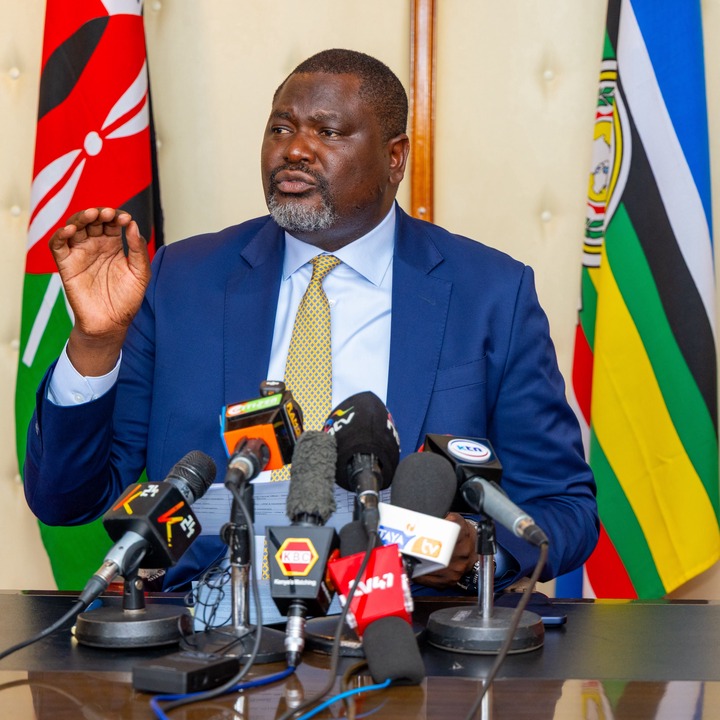
Public Service Cabinet Secretary Geoffrey Ruku has directed 84 human resource officers to surrender their payroll system access and proceed on mandatory 30-day leave following investigations into suspected payroll irregularities involving government agencies.
The directive follows preliminary findings by the Directorate of Criminal Investigations (DCI), which uncovered suspicious transactions within the payroll systems of the Ministry of Health, Kenya Police Service and Kenya Prisons Service.
In a statement dated Friday, October 16, Ruku said the administrative action would allow investigators to conduct forensic examinations without interference as authorities seek to establish the circumstances surrounding the transactions.
The suspected irregularities are estimated to have potentially caused losses of KSh 6.2 billion in public funds. InvKSh 6.2b payroll scandal rocks Ruto’s gov’t, exposes workers listed as employed before birthestigators are working to establish how the transactions occurred and identify those who may have been involved.
Ruku said the decision was necessary to protect public resources and ensure accountability in government payroll management. He emphasised that the measures were intended to facilitate investigations into the transactions flagged by detectives.
“I have directed the revocation of payroll system user rights of 84 human resources officers and an implementation of mandatory 30-day leave to allow further forensic investigations of the identified irregular transactions that have potentially led to loss of public funds,” Ruku stated.
The withdrawal of system access is intended to restrict the officers from making payroll changes while investigators examine the records. The mandatory leave will also provide an opportunity for the relevant authorities to review the transactions and establish the extent of any financial irregularities.
The Ministry of Health, Kenya Police Service and Kenya Prisons Service are among the institutions whose payroll systems have come under scrutiny. The investigation is expected to examine suspicious payments and determine whether established procedures were followed.
The KSh 6.2 billion figure represents the estimated potential loss linked to the transactions under investigation. However, the final amount, the precise nature of the irregularities and any individual responsibility will depend on the findings of the ongoing forensic process.
The administrative action does not, by itself, establish that the 84 officers committed any wrongdoing. Investigators must establish the facts and determine whether criminal offences or breaches of public service regulations occurred.
The case has renewed attention on the management of government payroll systems, which handle salaries and other payments to public employees. Weaknesses in payroll controls can expose public institutions to fraudulent payments, unauthorised changes and the loss of taxpayers’ money.
Ruku’s directive signals an effort to secure payroll operations while investigations continue. Authorities will now face the task of establishing how the suspected transactions were processed, whether public funds were lost and what measures may be necessary to prevent similar incidents.
The outcome of the probe could determine whether further administrative or legal action is taken against individuals found responsible. For now, the 84 officers have been directed to step aside for 30 days as detectives pursue evidence surrounding the suspected KSh 6.2 billion payroll irregularities.