

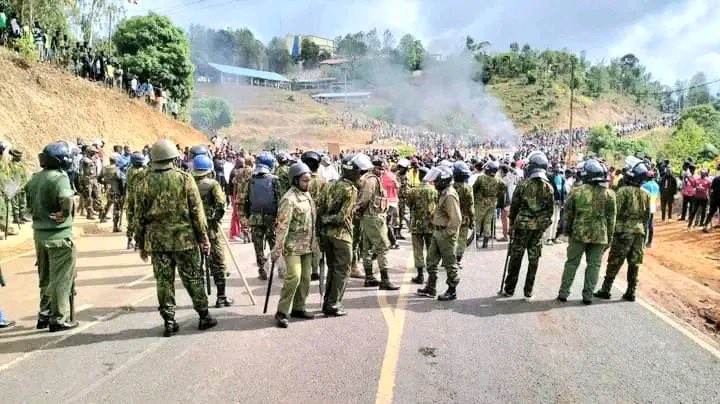
Transport was paralysed on the Mwingi–Garissa Road after groups blocked the highway over attacks, forcing bus companies to suspend services between Garissa and Nairobi due to unrest linked to clashes between pastoralists and farmers.
Hundreds of travellers were stranded for a second day on Wednesday as the disruption continued. The fresh chaos began on Tuesday afternoon following the killing of a 16-year-old boy in Nguni area. Residents gathered on the road and attacked vehicles, forcing several motorists to seek refuge at local police stations.
Special units from nearby Kanyonyoo were deployed to escort vehicles through the affected stretch. However, by Wednesday, the situation persisted, with road users parking their vehicles for fear of further attacks. Most shops remained closed in the area and in Mwingi town.
Police headquarters said on Wednesday that additional personnel had been deployed to the area to help address the situation. Police said the latest incident that sparked the unrest occurred on April 28, 2026, in Nguni, and was triggered by the killing of the 16-year-old in Katanginia area hours earlier. The motive of the killing was not immediately known.
Locals linked the killing to a similar incident on Saturday that left seven villagers dead in Kwa Kamari area. Protesters stoned vehicles and used boulders to block the highway for hours. Police responded and used tear gas and rubber bullets to disperse the crowd.
Tension remained high as police continued efforts to clear the road and restore free flow of traffic. Police said investigations into the killing of the teenager are ongoing.
The unrest comes amid rising tension along the highway since Sunday following the killing of seven people. Authorities have called for restraint among residents and urged community leaders to promote peace and reconciliation.
Deputy Inspector General of Kenya Police Eliud Lagat announced the upgrading of Kwa Kamari Police Station in Kitui to a fully-fledged station. The facility had previously operated as a police post with limited officers. This followed an incident in which a gang attacked and killed seven villagers on Saturday afternoon.
Lagat visited the area alongside General Service Unit Commandant Ranson Lolmodoni and assured members of the public of enhanced security, including protection for schools as they prepare to reopen for the second term. He also directed officers to remain alert, expedite investigations into the killings, and ensure those responsible are brought to justice.
He further said more officers would be deployed to both Kwa Kamari and Mashungwa police stations to strengthen security in the area.
In the latest incident, seven villagers were shot and killed in an attack in which attackers also razed three shops, a petrol station, and a motorcycle. Following the attack, residents of Kwa Kamari and surrounding areas fled their homes, fearing further violence.
Police spokesman Michael Muchiri linked the violence to an escalating cycle of revenge attacks involving members of the Kamba and Somali communities. According to the National Police Service, the violence began on March 29, 2026, when a 44-year-old Kamba herdsman was killed near Mwingi Game Reserve.
The following day, March 30, a suspected retaliatory attack left four members of the Somali community dead. The latest and deadliest incident occurred on April 25 in Kwa Kamari area, where seven people believed to be from the Kamba community were killed.
Police described the killings as “senseless and needless,” warning that the pattern of revenge attacks must stop immediately. The National Police Service said investigations into the incidents will be conducted thoroughly to ensure those responsible are brought to justice.