

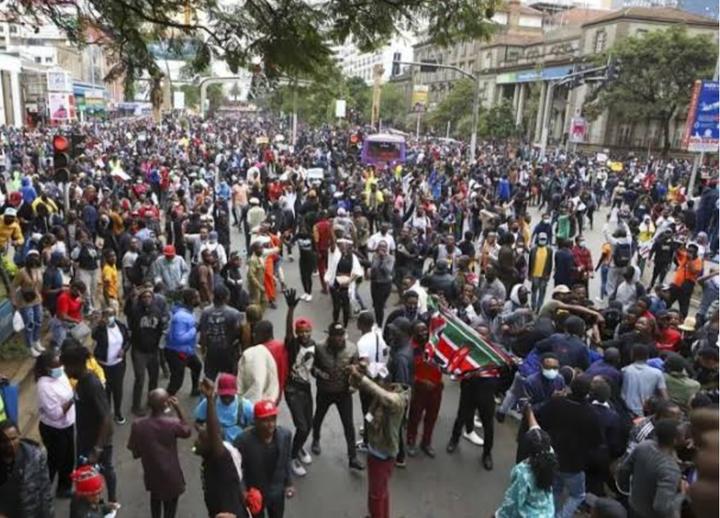
The pain is raw and real at Nairobi City Mortuary, where families are still streaming in, hoping and praying they don’t find their loved ones among the dead.
Vocal Africa, a community activist group, says at least 15 people lost their lives during the June 25 protests and that number could rise.
Among those confirmed dead is 17-year-old Ian Opongo from Rongai. His body was identified at the mortuary, and three more were brought in just yesterday.
The protests, which marked the anniversary of last year’s anti-Finance Bill demos, started out peaceful – mainly driven by Gen Zs demanding better governance. But things spiraled.
Nairobi and parts of Central Kenya, including Thika, Ruiru, and Nyeri, were hit hard by looting and chaos. Businesses like Nanas Mall and Carrefour Ruiru were ransacked, and public buildings in Ol Kalou were set on fire. What began as a cry for change quickly turned into scenes of destruction.
According to the Independent Policing Oversight Authority (IPOA), over 207 people were injured, and 61 were arrested during the demos, which spread to 24 counties. Reports from places like Molo, Matuu, and Ol Kalou say police opened fire on protesters. Rights groups like KNCHR are now pushing for full investigations into the use of live bullets.
But here’s where it gets murkier — numbers aren’t adding up. During last year’s protests, KNCHR said 24 people died, but President Ruto put the number at 19.
In fact, Daily Nation revealed that between June 25 and July 26 last year, Nairobi City Mortuary received a whopping 247 bodies way above the monthly average of 160. Shockingly, 115 of those were listed as “unknown.”
To make matters worse, Nairobi MCA Robert Alai claimed that some of the chaos wasn’t random. According to him, youth from places like Ruai, Githurai, Thika, and Limuru were paid to stir up trouble in town. He even alleged that college students from Kiambu were part of the plan.
By Kenyans