

Kenya and Uganda have officially agreed to eliminate all tariff and non-tariff barriers that previously limited trade between the two nations. The announcement was made by Trade Cabinet Secretary Lee Kinyanjui, who confirmed the full implementation of trade commitments under the East African Community (EAC) framework.
The agreement aims to improve the flow of goods, services, and people across key border points such as Malaba, Busia, Suam, and Lwakhakha. Both countries emphasized the need to reduce congestion at these crossings, which has been a persistent obstacle to efficient trade.
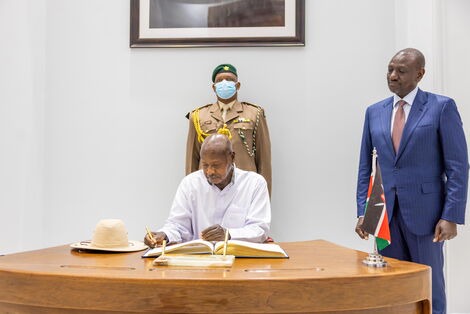
This move follows directives from President William Ruto of Kenya and President Yoweri Museveni of Uganda during their bilateral discussions in Nairobi in late July 2025. The leaders instructed their trade ministers to urgently meet and resolve outstanding barriers to foster smoother regional commerce.
During the meeting, the two presidents highlighted how trade restrictions have hindered economic growth in the East African region. They expressed concern over member states’ slow implementation of the EAC open market agreements, urging a renewed focus on cooperation.
As part of the initiative, Kenya and Uganda signed eight agreements covering sectors such as trade, tourism, agriculture, mining, and fisheries. President Ruto noted that these agreements would enhance people-to-people interactions and ensure mutual economic benefits.
The Memorandum of Understanding (MoU) also includes plans to develop the Greater Busia metropolitan area. Leaders agreed that collaboration in agriculture and livestock management would strengthen veterinary services and improve food security across both nations.
Additionally, President Ruto briefed Museveni on Kenya’s plans to extend the Standard Gauge Railway from Naivasha to Malaba and onward into Uganda. The discussion also covered the dualling of the Rironi-Mau Summit highway, which will connect directly to Malaba, further facilitating cross-border trade.
Both leaders reaffirmed their commitment to deepening bilateral relations and promoting shared prosperity. They underscored the importance of regional integration in creating a more unified and economically resilient East Africa.
The removal of trade barriers marks a significant step toward achieving a seamless East African market. It is expected to boost economic activity, enhance competitiveness, and create new opportunities for businesses and communities on both sides of the border.
By Newshub