

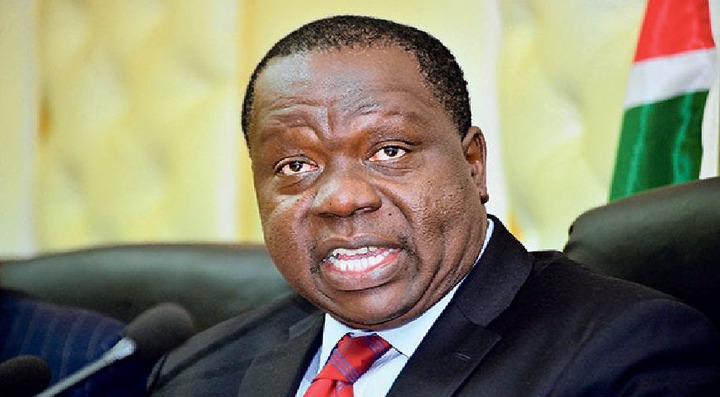
Jubilee Party leader Fred Matiang’i and People’s Party of Kenya (PPK) leader Ndindi Nyoro have launched a fierce campaign against proposed legislative amendments to ban the real-time livestreaming of election results.
Speaking during joint engagements at Ongata Rongai, the opposition leaders warned that stripping away public access to digital polling tallies directly undermines democratic transparency and sets the stage for electoral manipulation.
Matiang’i asserted that real-time result transmission is a critical constitutional safeguard that ensures public accountability, maintaining that any attempt to restrict media broadcasts or online polling feeds will compromise the legitimacy of the 2027 general election.
The strong pushback from top opposition figures comes amid growing public anxiety over attempts to overhaul key electoral management laws before official campaigns kick off.
Nyoro urged citizens across the country to reject statutory proposals aimed at restricting media coverage of result centers, accusing executive handlers of seeking to create an information blackout during critical counting stages.
He cautioned that eliminating live transparency mechanisms invites widespread suspicion and exposes the country to post-election volatility, arguing that real-time verification at polling stations is non-negotiable for a credible election.
Furthermore, opposition coalitions warned that if parliamentary mechanisms press ahead with restrictions on official digital streams, rival party outfits will establish independent, parallel result-transmission networks across all polling stations nationwide.
Strategists within the opposition movement maintain that citizens have a legal right to witness tallying processes as they unfold in real time.
I’m not Uhuru’s project – Matiang’iBy framing the livestreaming debate as a fundamental fight for democratic survival, Matiang’i and his allies are building a unified front across battleground counties to force legislative bodies into upholding full electronic transparency.
Ultimately, this high-stakes confrontation over electoral integrity exposes the fragile trust between the political class and electoral oversight bodies as the 2027 race approaches.
As public outrage grows over potential voting blackout provisions, the executive and parliamentary leadership face mounting international and civil society pressure to preserve digital accountability mechanisms.
If opposition factions successfully mobilize public resistance against restrictions on election results streaming, the battle for digital transparency will remain a defining battleground in the upcoming presidential contest.