

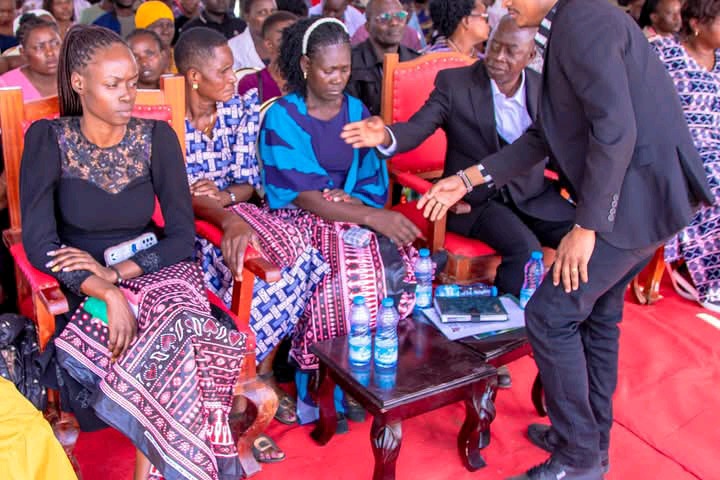
The burial of Albert Omondi Ojwang’, a 31-year-old Kenyan blogger and teacher, in Kokwanyo village, Homa Bay County, stirred controversy beyond his tragic death in police custody.
A section of Luo elders and leaders have opposed the inheritance rights of his widow, Nevinina Onyango, after she refused to participate in a key burial ritual, sparking heated debate over cultural expectations and respect.
During the emotional ceremony at Nyawango Primary School, attended by thousands, including politicians like Homa Bay Governor Gladys Wanga and MPs Millie Odhiambo and Babu Owino, mourners took turns throwing soil on Ojwang’s casket—a Luo tradition symbolizing acceptance, farewell, and unity with the deceased.
However, Nevinina visibly distanced herself from the grave and declined to cast soil when offered, a moment captured in a viral video. This act was seen by some as a rejection of her late husband and Luo customs.
“She refused to honour him,” said a Luo elder, explaining that throwing soil is a significant gesture in Luo culture. “It shows you stand with your spouse, even in death. Her refusal was disrespectful.”
Another mourner added, “When you marry into a Luo family, you embrace our traditions. Her actions showed detachment.”
In Luo customs, refusing this ritual can be interpreted as rejecting the marriage, leading some elders to argue that Nevinina should not inherit Ojwang’s properties, including his “simba” house, which he had renovated for their family.
Th dispute has divided opinions. Some defend Nevinina, citing her grief and personal choice. “She lost her husband in a brutal way. Maybe she couldn’t handle the ritual,” one supporter said.
Others, however, see her refusal as a cultural insult, fueling calls to deny her inheritance.
By Kenyans