

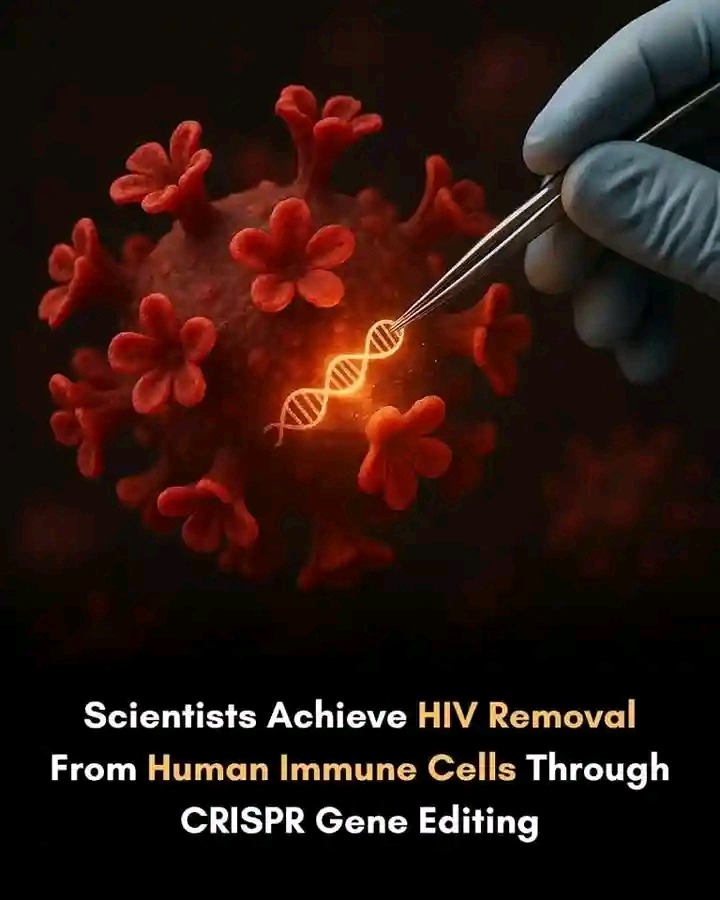
In a groundbreaking advancement in the fight against HIV/AIDS, scientists have successfully removed the Human Immunodeficiency Virus (HIV) from infected human immune cells using cutting-edge gene-editing technology. This development marks a significant step toward a functional cure for HIV, a virus that has plagued millions globally for decades.
Researchers used CRISPR-Cas9, a revolutionary gene-editing tool, to target and excise HIV DNA embedded within the genomes of infected immune cells—specifically, CD4+ T cells, which are the primary targets of the virus. Unlike previous antiretroviral therapies that only suppress HIV replication, this approach aims to eliminate the virus entirely from the body.
The study, published in a leading peer-reviewed journal, showed that the modified cells not only had the viral DNA removed but also retained their normal function without any apparent genetic damage. Scientists emphasized that while the results are still in the laboratory stage, they offer hope for future in vivo (in-body) applications.
“This is a monumental step forward,” said Dr. Angela Martinez, lead author of the study. “We’re now closer than ever to a potential cure that doesn’t just manage HIV but eliminates it.”
Clinical trials are still required to test the safety and effectiveness of this technique in humans, but the success of HIV removal from living human cells in the lab is a promising signal of what may lie ahead in the ongoing battle against HIV/AIDS.
By Newshub