

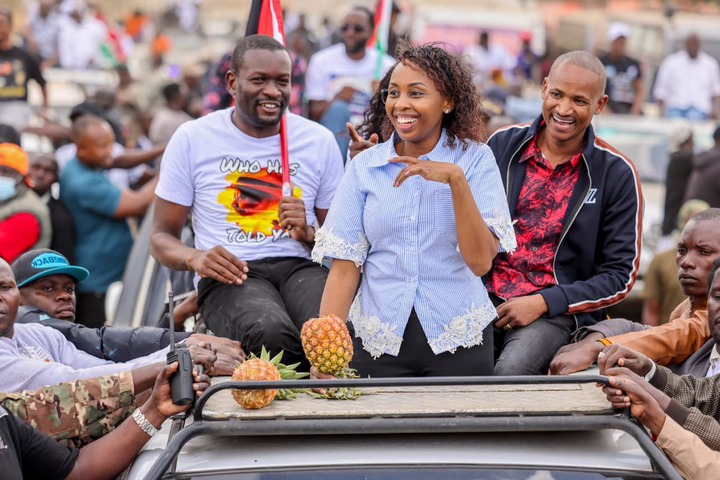
Political strategist and communications expert Pauline Njoroge has challenged claims circulating online that President William Ruto is the first African leader to be invited to represent the continent at the G7 Summit.
In a statement shared on social media, Pauline expressed surprise at what she described as excitement among some bloggers who were portraying Ruto’s participation as a historic first for Africa.
She argued that such claims overlook previous instances where African leaders attended G7 meetings at the invitation of host nations.
According to Pauline, Egyptian President Abdel Fattah el Sisi had previously attended a G7 gathering, raising questions about the narrative that Kenya’s Head of State is the first African leader to receive such recognition.
She further pointed out that former President Uhuru Kenyatta was invited to participate in G7 related engagements on two separate occasions during his tenure.
Her remarks appeared to be aimed at correcting what she considers inaccurate political messaging surrounding the summit.
Pauline maintained that while Ruto’s invitation is significant for Kenya and reflects the country’s growing influence in global affairs, it should not be presented as an unprecedented event without considering historical facts.
The debate emerged after reports and online commentary celebrated Ruto’s attendance at the summit in France, with some supporters describing it as a unique diplomatic achievement.
However, Pauline’s intervention has reignited discussion about the role African leaders have played in previous G7 forums and whether the current narrative accurately reflects that history.
The exchange has since attracted reactions from both supporters and critics, with some agreeing that historical context is important, while others insist that Ruto’s participation remains a notable moment for Kenya’s international standing regardless of past invitations extended to other African leaders.
As conversations continue online, the discussion has shifted from the invitation itself to the broader question of how diplomatic milestones should be communicated to the public.