

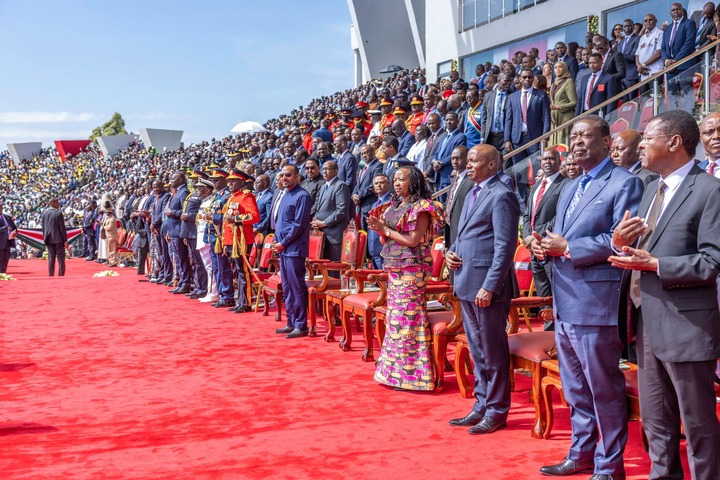
ELDORET, Kenya — President William Ruto has announced a sweeping set of economic proposals aimed at easing the cost of living, lowering property acquisition barriers, and expanding employment opportunities for young Kenyans.Speaking during the Mashujaa Day celebrations at Kipchoge Keino Stadium in Uasin Gishu County, President Ruto outlined four key policy shifts targeted at individual income tax, real estate transactions, digital device pricing, and public sector internships.
The measures, according to the head of state, are designed to inject liquidity directly into households and stimulate grassroots economic activity.
Income Tax Overhaul for Low-Income Earners
The government has formulated a legislative proposal to exempt workers earning Ksh 32,333 or less per month from Pay As You Earn (PAYE) income tax.
Administration officials noted that the adjustment is intended to cushion modest-income earners against inflationary pressures, allowing individuals to redirect earnings toward household essentials, transport, and educational commitments.
Stamp Duty Exemptions on Land Transactions
In an effort to widen property ownership access, the National Treasury has drafted proposals to eliminate stamp duty on land transactions valued at Ksh 1 million or less.
The framework also introduces progressive tax brackets for higher-value property transfers. The policy aims to reduce the financial overhead historically associated with land acquisition for low- and middle-income citizens.
Scrapping Mobile Phone Import Duty
To bolster participation in the digital economy, the state is seeking to remove the 25% import duty on mobile phones through necessary customs and legislative processes.
President Ruto emphasized that smartphones function as critical infrastructure for education, e-commerce, banking, and employment, arguing that lowering device costs will expand digital access across rural and urban demographics.
Scale-Up of the National Internship Programme
Addressing chronic youth unemployment, the administration announced the expansion of the National Internship Programme, effective January 2027.
The scaled-up initiative will absorb an additional 50,000 graduates from universities, Technical and Vocational Education and Training (TVET) institutions, and the Kenya Medical Training College (KMTC).
- Implementation Framework: Beneficiaries are set to receive monthly stipends distributed through a digital, merit-based placement system.
- Private Sector Incentives: The government will introduce targeted incentives for private employers to encourage corporate participation and secure structured work placement opportunities for fresh graduates.
Legislative Next Steps
President Ruto confirmed that he has directed the National Treasury to formally submit the proposals to Parliament for debate and approval.If enacted, the legislative changes will alter statutory deductions, real estate compliance fees, customs tariffs, and public sector youth recruitment pipelines nationwide.