

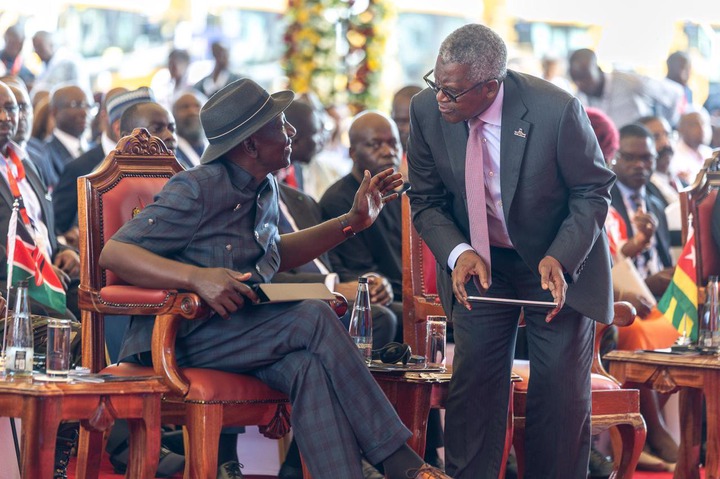
President William Ruto has said he would be accused of micromanaging in Kenya if he followed Aliko Dangote’s business projects as closely as former Nigerian president Olusegun Obasanjo did.
Ruto made the remarks during the groundbreaking ceremony of Dangote’s East Africa Refinery in Lamu on Wednesday, after Obasanjo described how personally involved he had been in monitoring the billionaire’s industrial projects in Nigeria.
“Knowing too much of what was going on in Aliko’s business, you’d have been accused in Kenya of micromanaging things, the same way I am often accused of the same,” Ruto said.
Obasanjo had recounted how he received regular updates on the progress of Dangote’s projects and personally intervened when construction work stalled.
He said that while Dangote’s projects were private investments, he closely followed their progress because of their importance to Nigeria’s industrial development.
Obasanjo recalled one instance when he received reports that work at a project site had stopped.
He said he had security personnel monitoring the site and would receive reports on whether contractors were working, allowing him to contact Dangote when progress was delayed.
The former Nigerian president also recounted the challenges Dangote faced while expanding his cement business, including what he described as obstacles created by an international cement company.
Ruto then used the account to explain Kenya’s decision to discourage cement imports and encourage local production.
He said his administration made the decision in 2023 not to continue importing cement when the country had the raw materials needed to produce it locally.
Ruto said the government subsequently imposed a levy on imported cement, a move he said prompted some foreign investors to leave Kenya because they were unwilling to expand their local production facilities.
He said the policy had since contributed to a shift in the ownership and production structure of Kenya’s cement industry.
Ruto welcomed the recent investment by a cement company under its new ownership to expand production capacity in Kenya.
The President also linked the cement story to Dangote’s experience in Nigeria, where he said the businessman had faced difficulties before establishing a major manufacturing operation.
Obasanjo said Dangote had been determined to manufacture cement locally rather than continue importing it, despite what he described as resistance and regulatory hurdles.
He recounted accompanying Dangote to government officials to help resolve some of the challenges affecting the project.
Dangote eventually established a major cement business that expanded across Africa, with the group now operating cement plants in several countries.
Ruto said the experience demonstrated the importance of African countries supporting investors who are willing to put capital into local manufacturing.
The President said Kenya’s policy was similarly aimed at encouraging investors to establish production capacity locally rather than relying on imported goods.