

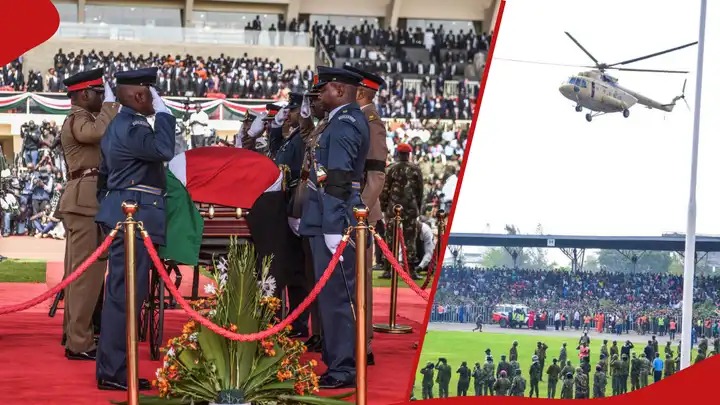
Several key reasons underlie the government’s decision to alter funeral arrangements for Raila Odinga — notably shifting his body’s transport to being flown directly to Bondo.
Firstly, the family had specified a strong wish for a swift burial: according to the funeral committee, Odinga’s desire was to be laid to rest within 72 hours of his death. To meet that tight timeframe — while ensuring all ceremonial and cultural obligations are properly addressed — the government opted for air transport, which is faster and more predictable than relying solely on a long road procession.
Secondly, logistical and security concerns played a major role. Large crowds and emotional outpourings at earlier stages created potential risks for disorder — including stampedes and crowd‐control issues. Moving the body by air helps manage these risks by reducing travel time on public roads and limiting the duration of public exposure en route.
Thirdly, cultural and traditional dimensions matter. Odinga’s burial is planned for his ancestral home in Bondo, Siaya County — a site of strong significance. Coordinating the state funeral national events, public viewings in Nairobi and Kisumu, and then the final rites in Bondo means that efficient transport becomes essential to keep the programme in sync without undue delay.
In sum, the altered plans reflect a blend of honouring personal wishes, managing national‐scale logistics and security, and respecting cultural timing — ensuring the late leader receives a fitting send‐off.
By tuko