

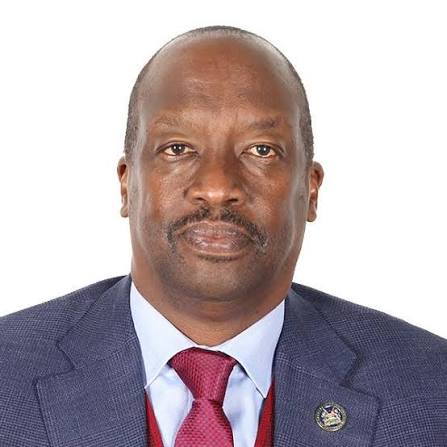
Outgoing Radio Africa Group chairman Kiprono Kittony received more than a farewell on Thursday evening during a dinner ceremony held to honour him.
It became a night of storytelling, with family, friends and colleagues retracing the difficult journey that transformed an idea many considered impossible into one of Kenya’s largest media organisations.
The reflections began with Kittony’s mother, veteran businesswoman and former nominated Senator, Zipporah Kittony, who first asked guests to observe a moment of silence for colleagues who had been part of the journey but had since died.
Fighting emotion, she said she almost skipped the event because she had not been feeling well, but felt compelled to attend after reflecting on the 27-year journey that had brought Radio Africa Group to where it is today.
“It was not easy,” Zipporah said.
Standing before guests, business leaders, politicians and media personalities, she congratulated her son for completing 27 years as board chairman and praised Radio Africa founder Patrick Quarcoo for pursuing what many believed was an impossible dream.
“It is with such pride and maternal nostalgia that I stand before you tonight to celebrate my son Kiprono Kittony as he steps down from the Radio Africa board after 27 remarkable years,” Zipporah said.
She said it was easy to forget how difficult it had been to launch a new radio station in Kenya in the late 1990s, when the country was still under KANU rule, the push for constitutional reforms was intensifying and access to broadcasting frequencies remained tightly controlled.
“So one morning, Kiprono came to me and said, ‘Mum, I have my friend from Uganda. We want to start a radio station in Kenya.’ I said, ‘What? At this time? You must be joking,” she said.
The son, who was very serious about it, one day arrived home with Quarcoo to explain that they really wanted to establish a radio station in Kenya.
Although initially sceptical, Zipporah said she eventually agreed to help the two secure an appointment with former President Daniel Arap Moi, admitting that even she became nervous as they explained their proposal before the Head of State.
“I wanted to hide after they said their proposed name for the station. I asked myself, Kiss FM, really? Moi did hesitate to ask, ‘are these really the people you are bringing here?’ We were all shaking,” she said, prompting laughter from the audience.
She said obtaining a broadcasting licence at the time required much more than submitting paperwork.
“Getting a broadcasting licence was not a matter of paperwork. It was a matter of persuasion and friendly courage,” Zipporah said.
According to her, Moi’s biggest reservation was not necessarily the radio station itself but its proposed name.
“We promised responsibility, but his main objection was the name ‘Kiss’. He considered it immoral.”
She said that although Moi eventually accepted the proposal.
“In the end, he trusted us. He ordered reinstatement of the licence, and Radio Africa Group was born,” Zipporah said.
She said the decision sparked controversy, with Members of Parliament debating the station in the House because of its unconventional branding.
The licence was later withdrawn, forcing the team back into negotiations before it was finally reinstated, saying that despite the criticism, Kiss FM quickly established itself as one of Kenya’s most popular radio stations.
Zipporah credited Quarcoo and Kittony for refusing to abandon their vision despite repeated setbacks.
She also joked that while the two had forgotten to compensate her for helping secure the licence, she expected the new leadership to remember her contribution.
“The only thing these two gentlemen have not done is pay me. Make sure I get my compensation,” she said, drawing laughter and applause.
The veteran businesswoman also praised Quarcoo, saying she had come to regard him as another son.
“I adopted him immediately,” she said.
She challenged Radio Africa CEO Martin Khafafa to protect the institution the founders had built.
“You have grown with this company. Your brother has taught you. You have had a good mentor. Please do not let this company go down. Make it even better than we found it,” Zipporah said.
Picking up from his mother’s reflections, Kittony described the licensing process as one of the toughest periods of his professional life.
“The beginning was difficult. It was daunting, and it required the greatest resilience and courage,” he said.
He said they appeared before Moi three times before finally securing approval.
The breakthrough, he recalled, came during a meeting at a hotel in Mombasa after months of frustration.
“My mother had reached a point where she said, ‘Leave it. We have tried enough. We have begged enough.'”
Instead of making another appeal, Kittony said he decided to employ reverse psychology.
“I told the President I had come to say goodbye because I was emigrating to Botswana.”
When Moi asked why, Kittony said he replied that he clearly could not build the business he envisioned in Kenya because every request he made was rejected.
“He looked at me and asked, ‘Who issues that licence?'”
After learning it was the then Communications Commission of Kenya, Kittony said Moi ordered that the matter be addressed.
He immediately flew back to Nairobi, went straight to the regulator’s offices and refused to leave.
“They asked me to go for lunch. I told them I was not leaving until they gave me the licence.”
By 4 pm, he said, he walked out carrying the frequency that would eventually become Kiss FM.
“It was very, very difficult, but we succeeded,” Kittony said.
He said Radio Africa had since grown into a company employing more than 500 people, entertaining over 27 million Kenyans and becoming a major taxpayer.
Reflecting on his 27 years as chairman, Kittony said the role demanded far more than presiding over board meetings.
“The chairman must be the fuse of the enterprise,” he said.
“You take the fire for things you know nothing about. You navigate politics, legal issues, tax matters and regulation.”
He said the experience shaped his leadership journey and prepared him for later roles, including chairing the Kenya National Chamber of Commerce and Industry, the Nairobi Securities Exchange and now Kenya Airways.
Kittony also shared the personal cost that came with leading one of the country’s biggest media organisations.
He recalled how a billboard advertising Kiss FM fuelled claims that the company was promoting immorality because it gradually revealed a model by removing items of clothing from the advertisement.
The controversy, he said, spilt over into his children’s lives.
He recounted how repeated criticism at a school eventually forced the family to transfer them elsewhere.
“They did not know why they had to leave their friends, but eventually we had to move them because of Radio Africa,” Kittony said.
He also revealed that editorial decisions occasionally affected him personally.
Quarcoo, who founded Radio Africa, said the idea of establishing Kiss FM in Kenya had initially sounded unrealistic.
“When I met Kiprono in Uganda, I told him, ‘Get us a licence in Kenya, and if you do, we’ll be number one in six months.'”
He said Kenya then had very few private radio stations and obtaining a licence required enormous political goodwill.
Quarcoo credited Zipporah with opening doors that would otherwise have remained closed.
“I think without Mama Zipporah we would never have had a radio station,” he said.
He recalled that shortly after approval was granted, he was instructed to launch the station within just two weeks.
“How you open a radio station in two weeks, I don’t know, but we did.”
Throughout the years, Quarcoo said, Kittony consistently shielded the newsroom whenever pressure came from politicians unhappy with stories carried by the company’s publications and radio stations.
“There was not a day I did not get a phone call at 4 am or midnight. I would call Kip, and he would simply say, ‘We’ll deal with it,'” Quarcoo said.
He said Radio Africa had remained guided by three editorial questions whenever difficult decisions arose.
“Is it true? Is it fair? Is it in the public interest? Those are the only questions.”
Quarcoo said disagreements with political leaders came with the profession.
“In our business, it is nothing personal, although sometimes it feels very personal.”
He praised Kittony’s leadership, saying it created an environment where journalists and managers could innovate without fear.
“My job was to take risks and change Kenya’s media. Kip gave us the space to do that.”
Turning to Kittony’s next assignment as Kenya Airways chairman, Quarcoo said he believed the same leadership qualities would serve the national carrier well.
“I have absolutely no doubt that you will make Kenya Airways our most loved airline again,” he said.
The evening ended with Kittony thanking his family, colleagues and staff for walking the journey with him over the past 27 years.
“I am extremely humbled and privileged that you have all come here to celebrate the journey that we’ve walked together,” Kittony said.
He said he was leaving Radio Africa confident that the company had built the resilience to continue growing long after its founders and early leaders had stepped aside.