

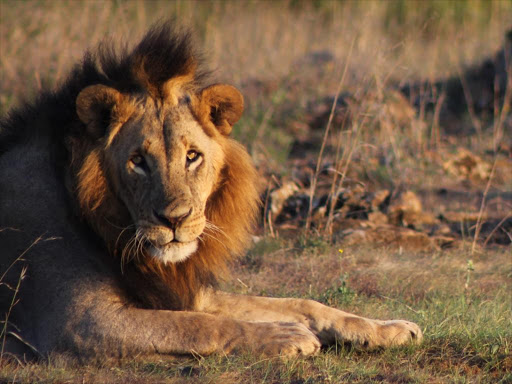
Police and Kenya Wildlife Service (KWS) officials are investigating claims that an 11-year-old boy was killed by a lion in Chanjalo area, Magarini, Kilifi county, as he walked home after attending a football match.
The victim, identified as Kelvin Amani, a Grade Four pupil at Chanjalo Comprehensive School, was attacked on a footpath at about 7:40am on Sunday.
According to police, the lion attacked and dismembered the boy, leaving a pool of blood on the path before dragging him into nearby bushes.
The animal reportedly fed on parts of his body before moving deeper into the bush with the remains.
A team of police officers and KWS officers from Kilifi, led by the warden, visited the scene as efforts continued to trace the lion and return it to a main park.
The teams processed the scene and recovered the boy’s remains deep in the bush.
The remains were taken to Malindi Sub-County Hospital mortuary pending preservation and autopsy.
Investigations into the incident are ongoing, with wildlife officers expected to determine the lion’s whereabouts.
The incident has been classified as a case of human-wildlife conflict.
Officials have urged the family of the deceased to seek compensation.
Authorities have also been running campaigns to address the conflict and anger surrounding such incidents.
In May 2025, Kenya introduced the third phase of its Human–Wildlife Conflict Compensation Programme, an initiative aimed at addressing such incidents and supporting affected families.
During its launch at Meru National Park, President William Ruto unveiled the Wildlife Conservation Card, a tool designed to help fund conservation efforts.
“Compensation is justice, but prevention is progress,” Ruto said, emphasizing the need for long-term solutions that benefit both people and wildlife.
“Through the Conservation Card, fencing, and community-led tourism, we are turning conflict into opportunity,” he added.
Developed in partnership with KCB Bank, the Wildlife Conservation Card is available in three tiers—Platinum (Elephant), Gold (Lion), and Silver (Cheetah).
A portion of every transaction made with the card—Sh10, Sh5 and Sh3, respectively—goes directly to the Wildlife Conservation Trust Fund.
The initiative aims to enable Kenyans and international supporters to contribute to wildlife conservation while fostering economic benefits for local communities.
With the approach, Kenya hopes to build a future where humans and wildlife can coexist more safely and sustainably.
This version keeps the supplied facts and quotes intact while tightening the wording and using more cautious attribution around the alleged lion attack.