

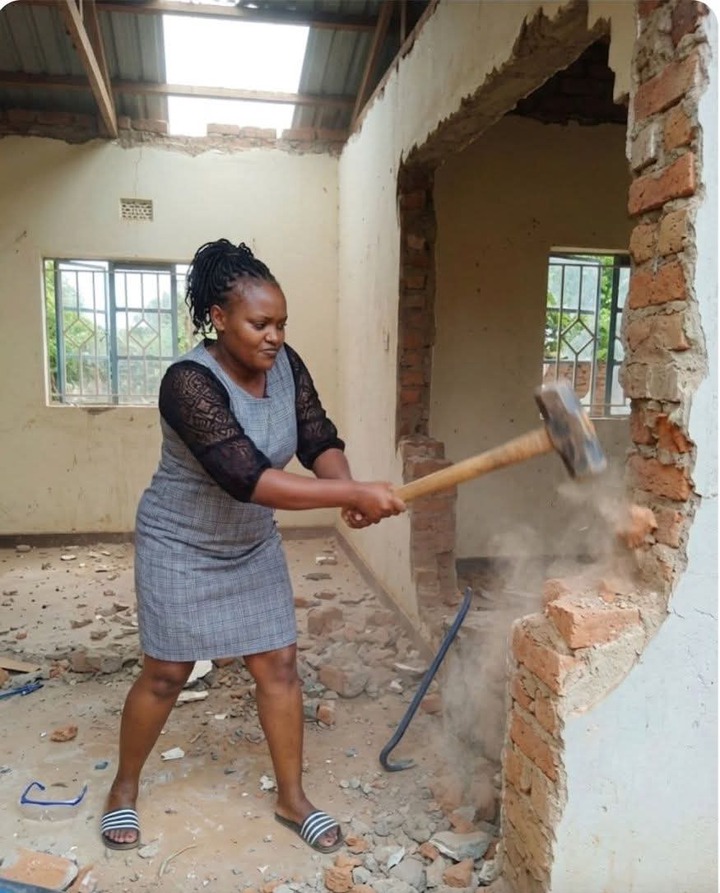
In a quiet corner of Kakamega County, where new iron sheets glint like badges of progress under the western sun, one homestead recently became the talk of the village for all the wrong reasons.
It began as a domestic fallout—whispers of quarrels, long silences, and finally a separation. But what followed stunned even the most seasoned elders. The wife, determined and unsmiling, arrived at the home she once shared with her husband, climbed up with hired help, and began removing the iron sheets from the roof. One by one, they came down. Within hours, the house that had stood proudly for years was left exposed, its timber skeleton staring helplessly at the sky.
Her reason was simple: she bought the iron sheets with her own money when they were building. If the marriage was over, so was her contribution.
Neighbors gathered at a distance, murmuring in disbelief. Some sympathized, arguing that many women quietly shoulder heavy financial burdens during construction, only for their efforts to be dismissed later. Others shook their heads, questioning what justice is served by leaving a home vulnerable to rain and ruin.
The incident has since ignited debate across local markets and WhatsApp groups. In rural western Kenya, iron sheets are not just building materials; they represent sacrifice—extra farm produce sold, savings scraped together, loans taken in faith. Removing them felt less like vandalism and more like reclaiming proof of sweat and sacrifice.
Yet the image of the roofless house lingers. It stands as both protest and warning: when relationships fracture, the damage rarely stays emotional. Sometimes, it’s measured in timber beams and open skies.
As one elderly neighbor summed it up quietly, “When love goes, even the roof can follow.”