

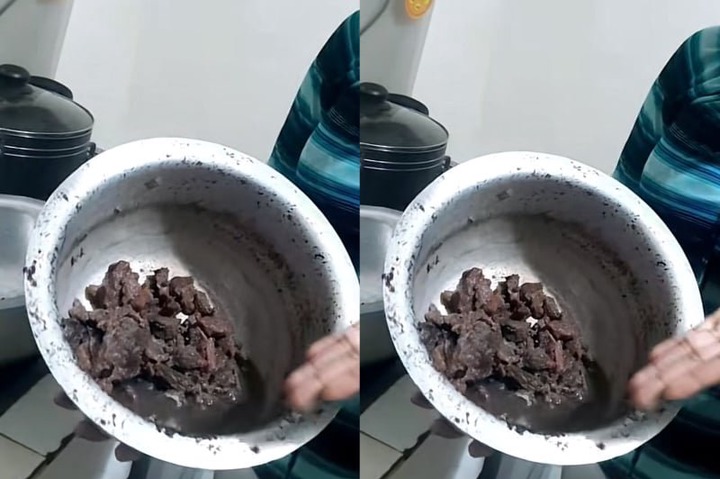
A Nairobi woman has raised concerns over the quality of meat being sold at local butcheries after an unusual experience while preparing a meal at home.
Vivian Ganda questioned the safety of meat she claims to have purchased from a local butchery after noticing that it remained unusually red even after boiling. She also complained that the soup turned black during cooking and that the meat produced an unfamiliar smell.
In a video, Ganda expressed concern over the appearance of the meat, saying she had never encountered such a reaction when preparing beef.
“Imagine napika nyama, inatoa soup black, nyama yenyewe ni red, alafu harufu yake pia si ile ya kawaida tumezoea ya nyama. Nyama gani inatoa soup ya black?” she asked.
She questioned why meat would retain its red colour after being boiled while producing unusually dark soup. She also suggested that the smell was different from what consumers normally associate with fresh meat.
Ganda went on to call on Geoffrey Mosiria to look into the matter, raising questions about the sources of meat supplied to butcheries and the possibility of animals being slaughtered under questionable circumstances.
“Mosiria enda utuangangalie kama wanachinja punda ama watu,” she said.
Food handling safety
Her remarks come amid longstanding concerns about meat safety, hygiene and the handling of animal products in Kenya. Consumers often rely on the colour, smell and appearance of meat when deciding whether it is fresh, although these characteristics alone cannot establish whether meat is safe for consumption.
A 2024 study published in Frontiers in Sustainable Food Systems examined food safety in informal markets in Kenya, including Nairobi and Machakos. The research documented concerns among consumers and vendors about meat handling, storage conditions and possible chemical adulteration.
Some consumers interviewed during the study raised concerns about meat that appeared unusually red and suspected that certain traders might be using chemicals to alter its appearance. However, these were reported perceptions and did not establish that the meat sold by any particular trader had been chemically treated.
The use of certain substances to preserve or alter the appearance of meat has also featured in previous investigations in Kenya. In 2018, reports emerged about the alleged use of sodium metabisulphite, commonly referred to as dawa ya nyama, to make old meat appear fresh.
The substance can cause adverse reactions, particularly among people sensitive to sulphites. The Ministry of Health has prohibited the use of unauthorised chemicals to preserve meat, with approved preservation methods including refrigeration, freezing and smoking.
Food experts have also cautioned consumers against relying on colour alone when determining whether meat is safe.
Fresh beef naturally has a red appearance because of myoglobin, a protein found in muscle tissue. Its colour can change depending on exposure to oxygen, lighting and storage conditions. A darker or unusual colour does not automatically mean that meat has been contaminated.
However, an unpleasant smell, slimy texture and poor storage conditions can indicate spoilage. Meat should also be handled and stored at appropriate temperatures to prevent the growth of harmful bacteria.
Testing would be necessary to determine whether the meat had been contaminated, improperly stored or treated with unauthorised substances.
Consumers who suspect that meat sold at a particular establishment is unsafe can report their concerns to public health officers for inspection and possible laboratory testing.