

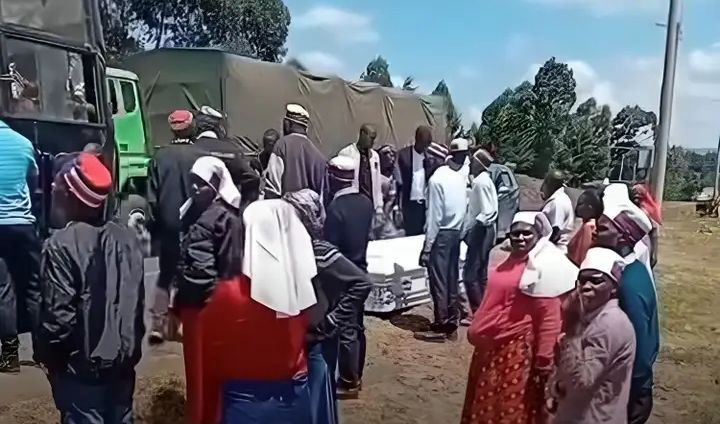
What began as a routine trip to lay a loved one to rest turned into an unsettling ordeal along the Kisumu highway, leaving mourners frightened, exhausted, and searching for answers.
According to witnesses, the mourners had departed Nairobi before dawn, expecting to arrive in Kisumu by mid-afternoon.
Instead, the journey came to a standstill near Awasi after the vehicle transporting the body repeatedly stalled without explanation.
Passengers said the bus would restart momentarily before shutting down again, forcing them to disembark several times.
Mechanics inspected the engine but found no fault. As frustration grew, confusion slowly shifted into fear.
At one point, mourners removed the casket and placed it beside the road, hoping that exposing it to fresh air and sunlight would ease the mysterious resistance.
However, when the coffin was returned to the vehicle, the breakdowns continued, deepening the sense of unease.
Church elders and community leaders eventually stepped in, offering prayers and speaking words of peace over the casket.
Some mourners believed the spirit of the deceased was unwilling to proceed, possibly due to unresolved family conflicts or unspoken grievances.
Others suspected that someone aboard the vehicle may have played a role in the deceased’s troubles, a belief rooted in traditional customs surrounding funeral disruptions.
As tension rose, suggestions were made to have all mourners alight and re-enter the bus one by one—a cultural practice meant to identify any individual believed to be spiritually unwelcome.
The proposal highlighted the emotional and cultural weight such incidents carry in many Kenyan communities.
Similar stories have emerged elsewhere, with some families linking stalled hearses to hidden disputes or unaddressed wrongdoing.
For those stranded on the Kisumu roadside, the experience served as a haunting reminder of how grief, tradition, and mystery often intersect during final journeys home.
By Nairobi