

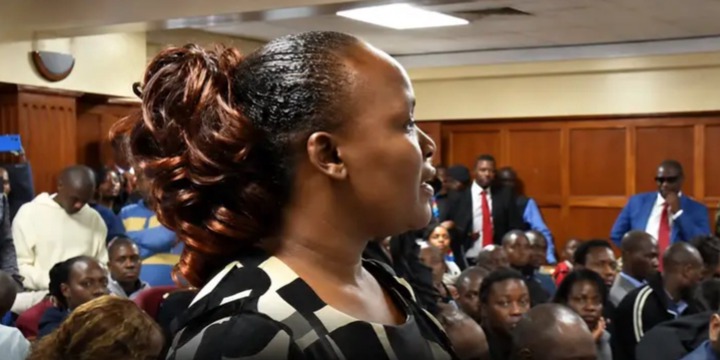
Melida Auma, the mother of the late Sharon Otieno, has formally pleaded with the High Court to spare former Migori Governor Okoth Obado from what her lawyers described as maximum prison time.
Speaking in court, Auma urged the court to adopt a “reconciliation” approach rather than retribution, arguing that continued imprisonment would not bring closure to the family.
“We forgive Governor Obado, don’t crucify him. Give him a non-custodial sentence. We want him to help Sharon’s three children,” she said, outlining her position clearly before the court.
According to the family’s submissions, the plea is not an attempt to undermine the justice process, but a deliberate decision to focus on the welfare of the children Sharon left behind.
The family maintains that they are open to a non-custodial sentence, but only if Obado agrees to take full financial responsibility for raising the three surviving children.
The children, who are said to be aged 12, 10, and 8, are expected to be the direct beneficiaries of the court’s consideration, should it grant the request.
Court observers and members of the public, however, have reacted with surprise and suspicion to the remarks.
Many have expressed confusion, with some questioning whether Auma’s identity and her claimed relationship to Sharon Otieno are accurate.
The statement has triggered renewed debate online and among members of the public, with users calling for clarification on whether Melida Auma is indeed the biological mother of Sharon Atieno.
Others have raised a different concern altogether arguing that the timing and framing of the plea could be aimed at weakening the case, particularly given that Obado was already convicted.
Critics contend that such statements, coming after conviction, may be interpreted as a strategy to reduce the severity of punishment rather than a genuine expression of mercy.
Despite the backlash, Auma’s position remains that reconciliation is possible and that the former governor should be allowed to contribute to the upbringing of Sharon’s children through a sentence that does not involve continued custody.