

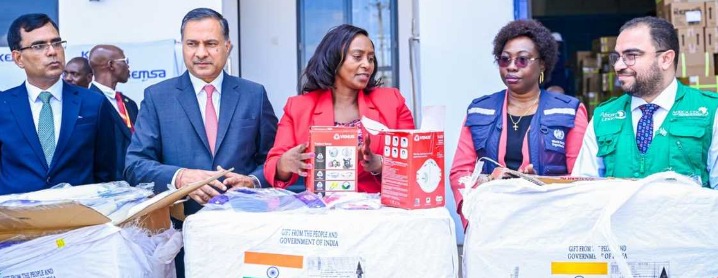
India has donated medical supplies worth KSh 83.39 million to Kenya to strengthen the country’s response to the ongoing Bundibugyo virus disease outbreak.
The 11-tonne consignment contains protective equipment, laboratory supplies and specialised medical devices intended to help frontline health workers prevent infections and improve disease detection.
The donation was officially handed over on Monday, October 19, 2026, at the Kenya Medical Supplies Authority (KEMSA) facility in Embakasi, Nairobi.
India’s High Commissioner to Kenya, Dr Adarsh Swaika, presented the supplies to Mary Muthoni, the Principal Secretary for Public Health and Professional Standards, during the handover ceremony.
The assistance is intended to reinforce Kenya’s capacity to protect medical personnel, investigate suspected infections and strengthen the systems used to manage the outbreak.
According to details released by the Ministry of Health, the consignment includes 6,000 personal protective equipment (PPE) kits, 60 powered air-purifying respirators and 30,000 N95 masks.
It also contains more than 86,000 sample transport kits, which are essential for moving specimens safely from health facilities to laboratories for testing and investigation.
Other items include protective gowns, gloves, face shields, boots and infrared thermometers. These supplies are expected to support infection prevention measures and help health workers carry out their duties while reducing the risk of exposure.
The shipment also includes biosafety cabinets and cold-chain refrigerators to support laboratory operations and the safe handling and storage of medical samples.
These resources are particularly important during an outbreak because suspected infections must be identified and investigated promptly. Proper protective equipment and safe specimen transportation also help reduce the risk of exposure among healthcare workers and laboratory personnel.
The Ministry of Health plans to distribute the donated supplies to frontline health workers, treatment and isolation centres, rapid response teams and screening points at health facilities and border entry points.
These locations play an important role in identifying suspected cases, assessing people who may have been exposed and ensuring that patients receive appropriate attention.
Speaking during the handover, Muthoni reaffirmed the government’s commitment to containing the outbreak through early detection, isolation and stronger infection prevention and control measures.
The ministry has also urged Kenyans to remain calm and vigilant as response activities continue. Public awareness, prompt reporting of suspected infections and cooperation with health officials remain important elements of outbreak management.
The latest donation is the second consignment of medical assistance India has provided to Kenya in 2026. The first batch was delivered in July, making the October shipment a continuation of the two countries’ cooperation in public health preparedness and emergency response.
India’s High Commission said the assistance reflected its support for Kenya’s efforts to contain the outbreak and its commitment to strengthening the longstanding healthcare partnership between the two countries.
The Bundibugyo virus is one of the viruses that cause Ebola virus disease. The illness can be severe, making early detection, appropriate clinical care and effective infection prevention measures essential to controlling an outbreak.
Kenya’s response has involved strengthening public health surveillance, protecting healthcare workers and improving the capacity to identify and manage suspected infections.
The new consignment adds protective equipment and specialised laboratory resources to those efforts. However, the donation alone does not establish that the outbreak has been contained; its impact will depend on how effectively the supplies are distributed and used alongside testing, surveillance, isolation and other public health interventions.
With equipment worth more than KSh 83 million now handed over, the government is expected to use the supplies to support health teams working to limit transmission and protect communities.
India’s continued assistance also highlights the role of international cooperation in helping countries respond to infectious disease outbreaks and strengthen their preparedness for future public health emergencies.