

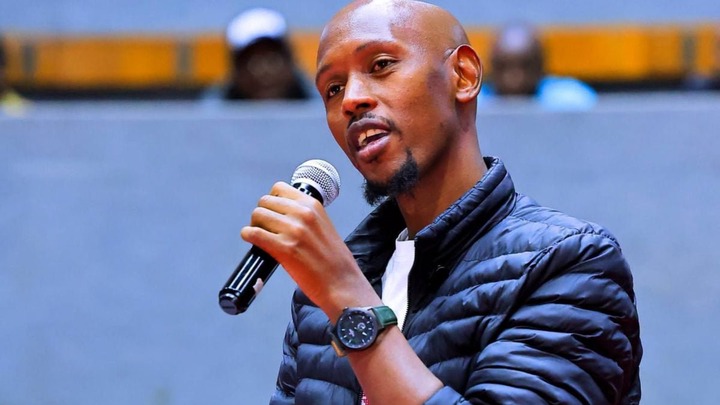
Geoffrey Mosiria has strongly defended his humanitarian initiatives alongside comedian Eric Omondi after the government raised concerns over digital fundraising.
The response comes right after their recent public appeal for a young boy named Bryson Makokha, which successfully raised nearly Ksh15 million.
Omondi recently confirmed that Bryson’s mother successfully underwent her scheduled interview, marking a major milestone for the campaign.
However, the sheer scale of these public fundraisers has caught the attention of authorities. On November 17, 2026, the Ministry of Gender, Culture and Children Services issued a press statement regarding the protection of children’s privacy in charitable publicity.
The State Department for Children Services warned against using distressed children’s photographs and personal stories on social media to solicit financial contributions.
The department noted that a child’s vulnerability should never be used for publicity or personal gain at the expense of their dignity.
Taking to his Facebook page on November 18, 2026, Mosiria addressed the shift in public discourse, noting that critics are now focusing on regulations rather than the positive impact of their charity work.
“Instead of appreciating the spirit of compassion, generosity and solidarity among Kenyans, the conversation has suddenly shifted to taxation,” Mosiria stated.
He questioned why effective health insurance safety nets are missing for poor citizens who desperately need medical attention.
Child protection laws
Mosiria clarified that their team is not against following the law. He acknowledged the need for parental consent and legal safeguards when rescuing vulnerable children.
“If Kenyans are required to obey the law and comply with child protection regulations, that is perfectly fine,” he explained.
However, he challenged the government to explain why many children are still abused and living in desperate conditions despite the existence of these laws.
Demand for accountability
Mosiria argued that citizens who step in to rescue suffering children should be appreciated for complementing government efforts rather than being viewed with suspicion
“If we must account for every shilling we raise to save lives, who accounts for the billions allocated in the government budget in the name of protecting those same lives?” he asked.
Wrapping up his thoughts, Mosiria maintained that volunteers should not be treated as a problem simply because they choose to stand with suffering Kenyans.
“Helping the poor is not a crime. Saving lives is not an offence,” Mosiria concluded. “Protecting children is our collective responsibility. And discouraging humanitarian support is not a solution.”