

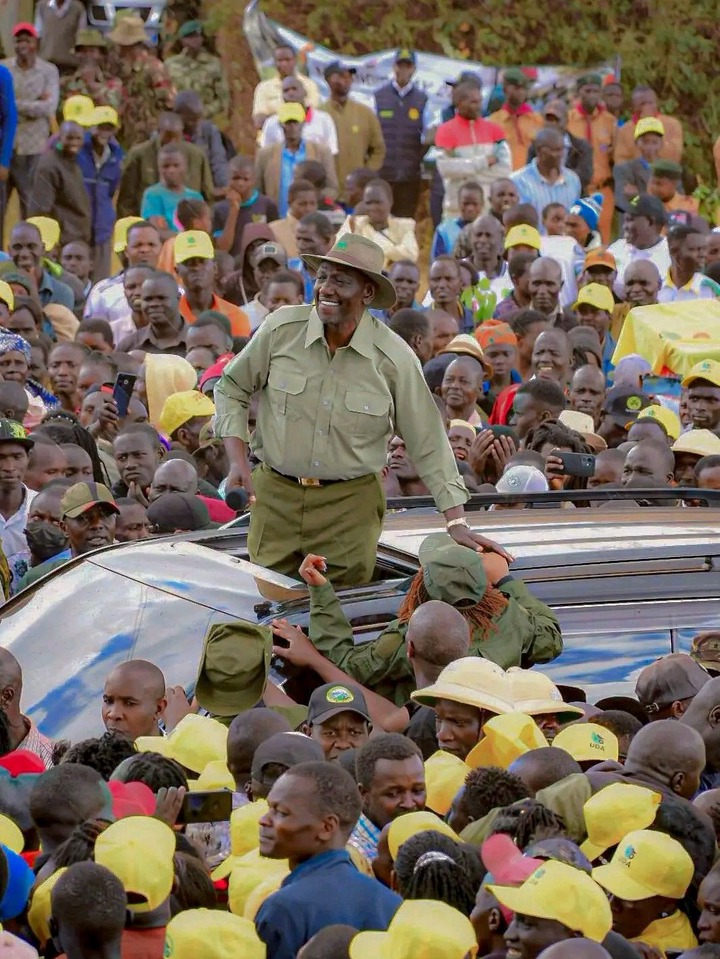
According to reports, President William Ruto intervened during his tour of Nandi County after sections of the crowd heckled local leaders, disrupting their attempts to address residents at a public gathering.
The incident occurred as Nandi Woman Representative Cynthia Muge and Deputy Governor Dr. Yulita Chebotip Cheruiyot were preparing to speak before the assembled audience. Their attempts to address the gathering were reportedly interrupted by loud boos and persistent shouting from sections of the crowd.
The disruption created an uncomfortable atmosphere at the event, with the audience’s reaction making it difficult for the two leaders to deliver their messages. The incident also highlighted the growing tensions surrounding the reception of elected representatives during public engagements in the region.
President Ruto eventually stepped in to restore order after noticing the escalating commotion. Taking the microphone, the Head of State firmly addressed the crowd, saying, “Hapana, hapana,” as he attempted to stop the heckling and allow the programme to continue.
The President subsequently appealed to residents in his native Kalenjin language, urging them to demonstrate respect for elected leaders and allow public officials an opportunity to address their constituents.
He emphasised the importance of maintaining order during public gatherings, regardless of political disagreements or dissatisfaction with individual leaders. His intervention underscored the need for peaceful engagement between elected representatives and the communities they serve.
The incident comes amid increasing reports of politicians facing hostile receptions during public events in different parts of Kenya. Such disruptions have raised questions about the relationship between elected leaders and residents, particularly as political competition intensifies ahead of the 2027 General Election.
During previous engagements in Nandi County, some politicians have also struggled to address audiences after sections of the crowd interrupted their speeches. These incidents have generated differing reactions, with some residents expressing concern that heckling prevents leaders from discussing development matters, while others view it as an indication of dissatisfaction with their representatives.
Ruto’s intervention demonstrated his attempt to ensure that the gathering remained orderly and that the affected leaders could be heard. However, the reasons behind the crowd’s reaction would require further clarification to establish whether it reflected specific grievances, political disagreements or other concerns.
Footage of the encounter has circulated online, drawing attention to the exchange between the President and the audience. The incident has added to ongoing discussions about political accountability, public participation and the conduct of leaders and citizens during political gatherings.
As the country approaches the next general election, interactions between elected officials and their constituents are likely to remain under close scrutiny.
The episode highlights the importance of maintaining peaceful dialogue at public events while ensuring that residents have opportunities to express their concerns and leaders are given a fair chance to respond.