

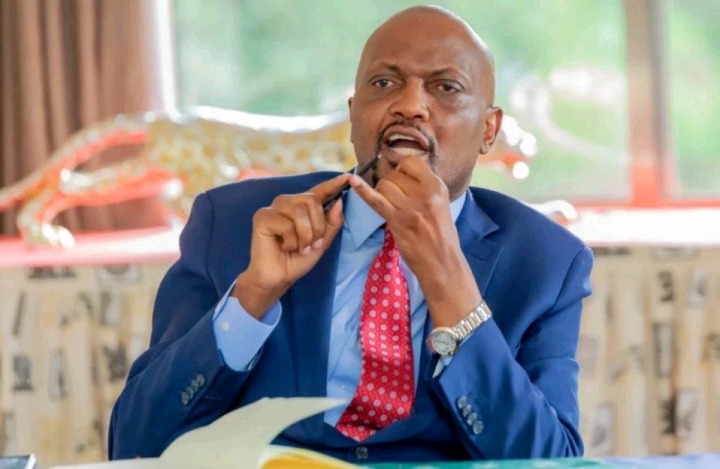
Former Cabinet Secretary Moses Kuria has sparked fresh political debate in the Mount Kenya region after praising former Deputy President Rigathi Gachagua’s efforts to combat illicit alcohol while accusing his successor, Kithure Kindiki, of showing less commitment to the fight.
In a statement shared on social media, Kuria acknowledged that he disagreed with several of Gachagua’s political decisions but insisted that his record on tackling illicit brews deserved recognition.
“Rigathi Gachagua was serious about fighting illicit brews in Mt Kenya region. The current holder of that office is not,” Kuria stated, in a direct reference to Deputy President Kindiki.
Kuria’s remarks followed the circulation of a video showing a woman speaking about the devastating effects of alcohol abuse on her family. The woman reportedly recounted the difficulties her son experienced because of alcohol before recovering through faith and perseverance.
Reacting to the video, Kuria suggested that stronger action against illicit brews could have prevented some of the suffering experienced by families in the region.
His comments have attracted mixed reactions online, with some Kenyans supporting his assessment while others argue that the fight against illicit alcohol should be judged by concrete results rather than political comparisons.
The debate comes as the country approaches the 2027 General Election, with political competition and discussions about leadership in the Mount Kenya region gaining momentum.
Kindiki, however, has publicly pledged to lead a renewed campaign against illicit brews. In September, he announced plans for a multi-agency meeting to strengthen enforcement, while subsequent government updates reported raids targeting illegal alcohol manufacturers and distributors.
The government has also announced proposals for tougher laws targeting those involved in the production and distribution of dangerous alcoholic drinks.
Kuria’s intervention has therefore reopened questions about the effectiveness of previous and current efforts, particularly in communities where illicit alcohol continues to threaten public health, families and young people.
Ultimately, residents will be looking for sustained enforcement, prevention programmes and measurable improvements rather than political exchanges over who deserves credit for the fight.