

Kenyans on TikTok on April 26, 2026, turned a viral moment into a coordinated act of giving, gathering in large numbers at Kajiunduthi Stadium in Tharaka Nithi to support the family of a young boy widely known as the Kwa Mbae boy.
What began as online engagement quickly translated into physical mobilisation, as content creators, local leaders and well-wishers travelled from different parts of the country to offer support.
Contributions ranged from financial donations to clothing and pledges toward medical care for some members of the boy’s household.
Nairobi County Head of Customer Care Services Geoffrey Mosiria, who was among those involved in the initiative, said the mobilisation demonstrated the power of collective action driven by social media.
“Today has been a success, tumekuwa Kwa Mbae huko Tharaka Nithi to support Moses Kihara and his brother Lewis, who is battling throat cancer. Through my platforms, I helped raise Sh500,000 to support the family,” Mosiria said.
He added that the funds were part of a broader effort to assist the family, noting that the boy’s brother had already undergone surgery.
“Lewis has already undergone surgery and is still recuperating at the hospital, and we continue to pray for his full recovery. Indeed, when Kenyans come together, great things happen,” he said.
“For purposes of sustainability, especially now that cancer is one of the biggest challenges affecting many Kenyan families, I appeal to elected leaders to come up with a bill that will help Kenyans access free cancer diagnostics and treatment in both public and private hospitals,” he added.
The mobilisation followed growing public interest in the circumstances surrounding the boy after a short video clip went viral on TikTok.
The boy, identified as Musa Kihara, is a five-year-old from rural Meru. He first gained national attention after being recorded giving directions to a bodaboda rider who had stopped to ask for the way.
In the clip, the rider asks, “Unajua kwa Mbae?” prompting the child to respond confidently, pointing into the distance and explaining the route using nearby homes and familiar names.
He refers to landmarks such as homesteads and individuals known within the area, offering directions based on local knowledge rather than formal road markers.
The video was widely shared across social media platforms, where it was received as both humorous and relatable.
Many users identified with the style of giving directions, which reflected common rural experiences across the country.
As the clip gained traction, the phrase Kwa Mbae became a trending sound, used in memes, captions and recreated content by other users.
However, as the video continued to circulate, attention shifted from humour to the living conditions captured in the background.
Viewers began raising questions about the boy’s home environment, prompting some users to trace the location of the video.
Those who later visited the family said they found a household facing some challenges. These details were widely shared online, triggering calls for support.
By the weekend, plans had been made to organise a public fundraising event, culminating in the gathering at Kajiunduthi Stadium.
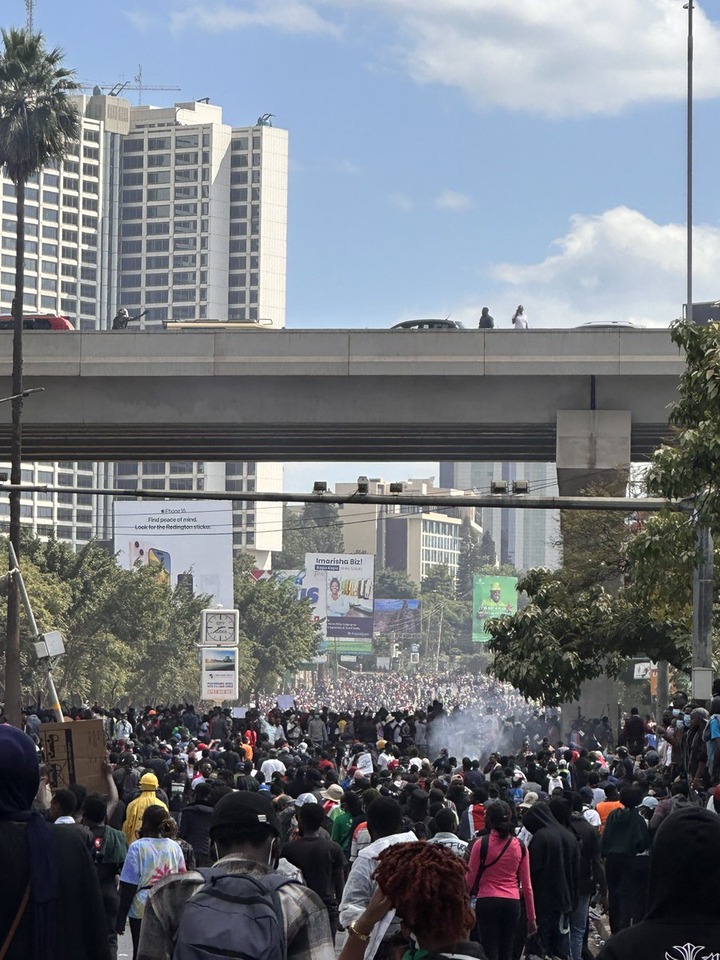
Images and videos shared online showed crowds assembling at the venue, where donations were mobilised and handed over. Some attendees documented the event on their platforms, while others contributed quietly.
One attendee wrote, “Kenyans showing up for their own,” as images of the crowd circulated online.
Another added, “We came because we laughed. We stayed because we saw a family that needs us.”
Mosiria said part of the funds raised would also support individuals connected to the viral video, including the bodaboda rider who recorded the clip.
“I also advised that we shall as well support the bodaboda rider who recorded him so that he can own his own bodaboda,” he said.
The event marked a shift from online interaction to offline action, with participants using their platforms to mobilise resources and coordinate support.
While the initiative was largely driven by individuals on social media, it drew participation from a broad cross-section of the public, including residents from neighbouring counties.
The story of Musa Kihara has since remained in the public eye, with continued updates shared online regarding the family’s situation and ongoing support efforts.
The original video that brought him national attention continues to circulate, even as focus has shifted to the assistance it has generated.
Supporters indicated that contributions would go toward medical care and other immediate needs, with some efforts aimed at facilitating specialised treatment in Nairobi.
As of now, support efforts for the family are ongoing, with both online and in-person contributions continuing to be mobilised.
The developments highlight how social media platforms are being used not only for content sharing but also for organising responses to real-life challenges.
What began as a brief roadside interaction in a rural setting has evolved into a national mobilisation effort, driven by individuals who chose to act after encountering the story online.