

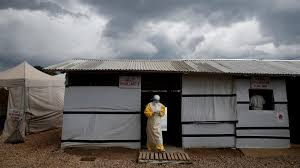
Ebola virus is named after a river in the Democratic Republic of Congo, where it was first recognised.
It comprises four distinct subtypes: Zaire, Sudan, Côte d’Ivoire and Reston.
Ebola virus disease (EVD) was formerly known as Ebola hemorrhagic fever and often affects humans. Non-human primates (monkeys, gorillas, and chimpanzees) can also contract the disease.
According to WHO, the average EVD case fatality rate is around 50 per cent. The agency further notes, the case fatality rates have varied from 25 per cent to 90 per cent in past outbreaks.
The largest Ebola outbreak in history ravaged the West African nations of Guinea, Liberia, and Sierra Leone from 2014 to 2016, killing more than 11,300 people.
Symptoms
Ebola is often characterised by the sudden onset of fever, intense weakness, muscle pain, headache and sore throat.
The victims are then hit with vomiting, diarrhoea, rash, impaired kidney and liver functions, and internal and external bleeding. Laboratory findings include low white blood cell and platelet counts and elevated liver enzymes.
https://www.facebook.com/1464211677174747/posts/3224642321131665/?app=fbl
by: Rosemary Likare