

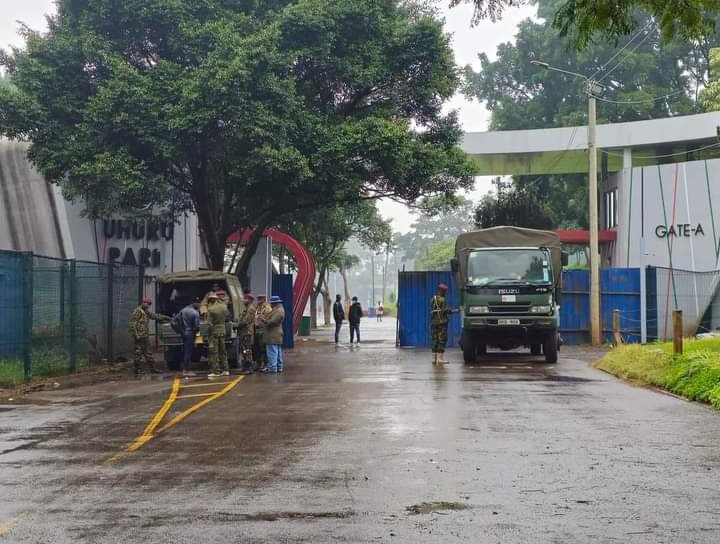
Nairobi’s streets are on high alert as police officers are strategically positioned ahead of the planned “Occupy Uhuru Park” demonstrations. This movement, predominantly led by Generation Z, aims to make a bold statement by occupying Uhuru Park, demanding the resignation of President William Ruto.
The growing dissatisfaction with President Ruto’s administration has reached a tipping point. Many Kenyans, especially the younger generation, feel disillusioned by the government’s failure to address crucial issues such as economic instability, high unemployment, and persistent corruption. The sentiment among the protesters is that the current leadership is out of touch with the needs and aspirations of the people, necessitating a change at the top.
Generation Z has leveraged the power of social media to organize and galvanize support for the “Occupy Uhuru Park” protests. Platforms like Twitter, Instagram, and TikTok have played a pivotal role in spreading the word and rallying a significant number of supporters. Hashtags related to the movement have trended for days, reflecting widespread discontent and a call to action.
In anticipation of the protests, the government has deployed a substantial police presence across Nairobi, particularly around Uhuru Park. The authorities’ primary goal is to maintain order and prevent any potential outbreaks of violence or property damage. However, this heavy police presence has drawn criticism from various quarters, with accusations that the government is attempting to stifle legitimate dissent through intimidation.
The grievances fueling the protests are deep-seated and multifaceted. Protesters are demanding greater transparency in government operations, increased job opportunities, and a rigorous crackdown on corruption. These demands resonate strongly with a population that feels increasingly marginalized by the political elite. The movement is not just a reaction to the current administration but a broader call for systemic change and accountability.
By Newsmedia