

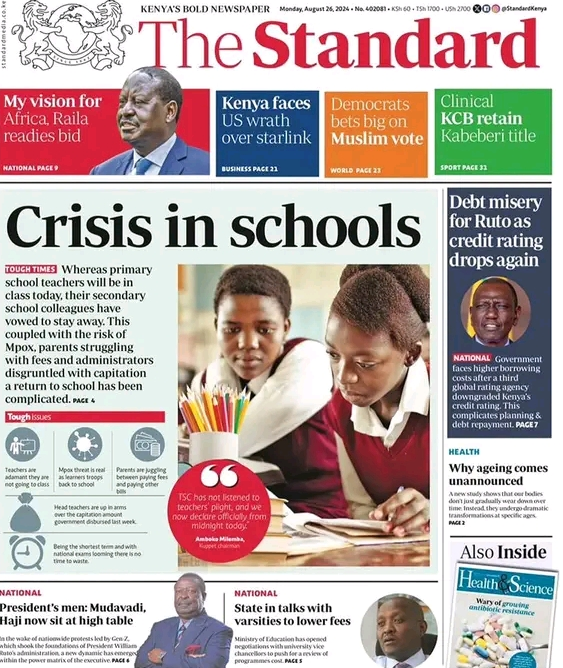
As the new school year begins, a perfect storm has engulfed the education sector, with primary school teachers braving hazardous conditions while their secondary school counterparts have chosen to stay away. This unprecedented situation is compounded by the looming threat of MPOX, mounting parental fee struggles, and disgruntled school administrators.
Today, primary school teachers are on the front lines, determined to maintain educational stability despite severe challenges. They face the dual burden of risking exposure to MPOX, a concerning health threat that has made many nervous about their safety. Their dedication contrasts sharply with the growing discontent among secondary school teachers who have opted to stay home, citing unsafe conditions and inadequate support from educational authorities.
Adding to the crisis, many parents are grappling with financial strain. The skyrocketing cost of school fees has left families struggling to keep up, exacerbating the financial pressures on households already burdened by economic hardships. This struggle is further intensified by administrators’ dissatisfaction with the current capitation system, which they argue fails to meet the practical needs of schools.
In this chaotic landscape, the return to school has become increasingly complex. The dichotomy between the commitment of primary school teachers and the absenteeism among secondary staff underscores a deepening divide within the education system. With health risks, financial pressures, and administrative frustrations all converging, the road to a stable educational environment seems fraught with challenges.
As the crisis unfolds, it remains to be seen how these issues will be resolved. For now, the focus is on navigating this turbulent period and finding solutions that address the myriad problems plaguing the education sector.
By Nairobi