

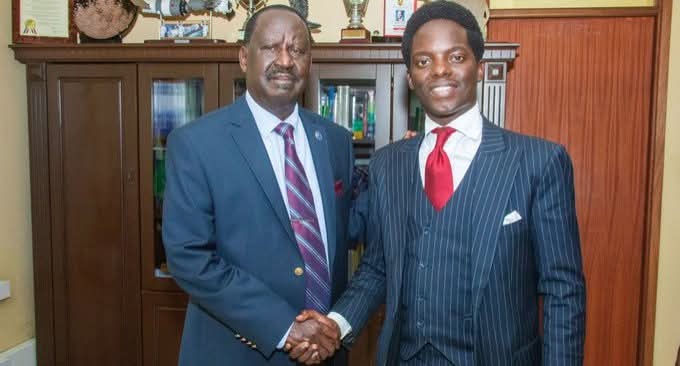
Austin Odhiambo’s recent endorsement of Kasmuel McOure’s decision to join Raila Odinga’s Orange Democratic Movement (ODM) has sparked heated debate across Kenya’s political landscape. McOure, a prominent figure in the 2024 Gen Z-led protests against the controversial Finance Bill, was once hailed as a voice of the youth, challenging entrenched power structures. His alignment with ODM, a party rooted in Kenya’s traditional political framework, has left many questioning whether this move is a pragmatic step toward reform or a departure from the Gen Z movement’s ethos.
Odhiambo argues that McOure’s choice reflects a mature understanding of political realities. “Kasmuel joining ODM shows he’s serious about change,” Odhiambo stated in a recent interview. “Raila’s experience and ODM’s structure offer a platform to push for accountability and youth inclusion from within the system.” He views McOure’s decision as a way to bridge the energy of the Gen Z movement with the established mechanisms of governance, potentially amplifying its impact.
However, critics see this as a betrayal of the decentralized, anti-establishment spirit that defined the Gen Z protests. Many young Kenyans feel McOure’s shift to ODM, a party associated with longstanding political dynasties, undermines the movement’s call for a new kind of leadership. Social media platforms buzz with accusations of opportunism, with some labeling McOure a “sellout” for aligning with Raila Odinga, a figure both revered and criticized for his decades in politics.
McOure himself has defended his decision, emphasizing ODM’s pro-people stance and his role in its Youth League to mobilize young voters. Whether this move will empower or alienate his base remains to be seen, but it undeniably marks a pivotal moment in Kenya’s evolving political narrative.
By Nairobi