

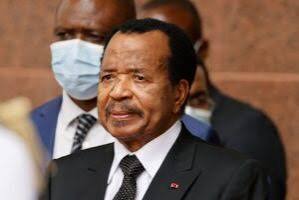
Biya is considered to be a worldly and educated man, He served Cameroon in many positions as a career bureaucrat. Biya holds the record for Africa’s oldest sitting Head of State and second-longest serving leader: The president of Equatorial Guinea, Teodoro Obiang Nguema Mbasogo, has been in power since 1979.Over the past few years, Biya made the news, especially in his country that he had passed on but this turned out to be untrue.
It was not the first time rumours of his death were spreading on social media.This is due to keeping a low profile and delegating most of his day-to-day activities to the country’s prime ministers.Biya has been in office for more than four decades – has not been seen in public since September 8, when he attended a China-Africa forum in Beijing.
Following the rumours, the government spokesman, René Sadi, issued a statement denying the rumours.He added that President Biya would return home “in the next few days”, the BBC said.
The head of the president’s private office who is currently with him in Geneva, also said he is in excellent health.Biya was Cameroon’s prime minister and became president in 1982 after his predecessor, Cameroon’s first president following the country’s independence from France, stepped down due to health reasons.
The majority of appointments Biya made in the ensuing years were members of his own southern Beti ethnic group, which quickly grew to dominate senior prefect positions and the prime minister’s office.
In the decades since, Biya’s party has used everything from fraud to redistricting to expand his victories and the ruling party’s legislative majorities, according to political analysts. Human rights groups have accused him of brazen strongman tactics, including torture and intimidation of his opponents.
He assumed office on 6 November 1982 following the resignation of President Ahmadou Ahidjo. Paul Biya married Mrs Chantal BIYA on 23 April, 1994. He is a father of three children: FRANK Biya, Paul BIYA Junior and Anastasia Brenda BIYA
Biya maintained power through classic authoritarian means. “Tyrants, the World’s 20 Worst Living Dictators”, by David Wallechinsky, ranked Biya with three others commonly in sub-Saharan Africa: Robert Mugabe of Zimbabwe, Teodoro Obiang Nguema Mbasogo of Equatorial Guinea, and King Mswati of Swaziland. He describes Cameroon’s electoral process in these terms: “Every few years, Biya stages an election to justify his continuing reign, but these elections have no credibility. In fact, Biya is credited with a creative innovation in the world of phony elections.
The era after Biya feels akin to navigating incharted territory. When a political structure is anchored in stability, as Biya has so meticulously ensured, it is difficult to envision a future sans its architect. Our leader seems to desire a clone, a political stand-in who can perpetuate his rule from the afterlife.
As a result, the succession battle has found its stage on social media, igniting a whirlwind of conspiracies, betrayals, and political manoeuvrings. We appear to be spiralling towards a double-edged succession: the inevitable execution of Biya’s desires (channelled through a successor), followed by the people’s wildcard choice, an unpredictable twist of fate.