

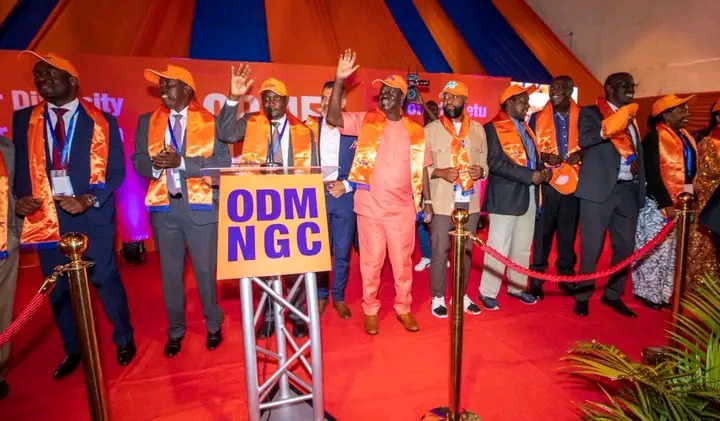
The recently announced agreement between the Orange Democratic Movement (ODM) and the United Democratic Alliance (UDA) to work together until 2027 has sent ripples through the political landscape, sparking mixed reactions within the opposition coalition.
While the deal is being framed as a move to foster national unity and stability, its reception among ODM’s rank and file has been anything but uniform. Questions are now emerging about the cohesion of the opposition following the conspicuous absence of ODM Secretary General Edwin Sifuna from the joint meeting that unveiled the pact.
Sifuna, who had previously expressed dissatisfaction with the February Memorandum of Understanding (MoU) and even hinted at quitting the party, was expected to play a central role in cementing the new alliance. His absence, therefore, has fueled speculation about internal cracks within ODM and whether all leaders are aligned with Raila Odinga’s latest political maneuver.
Insiders suggest that some opposition leaders feel blindsided by the arrangement, arguing that the deal dilutes the party’s identity and compromises its role as a watchdog against government excesses. They fear the cooperation may render the coalition ineffective ahead of 2027, leaving it without a clear ideological anchor.
Supporters of the agreement, however, defend it as a pragmatic step toward national healing after years of political tension. They argue that the deal will allow the country to focus on development rather than endless politicking.
Still, Sifuna’s absence has spoken volumes. It underscores the growing unease among ODM leaders, many of whom worry that the move risks alienating loyal supporters who view ODM as the embodiment of opposition politics.
As the dust settles, the real test will be whether ODM can maintain its internal unity while balancing collaboration with UDA and preserving its credibility as an independent political force.
By Kenyans