

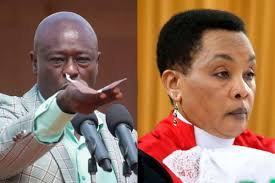
A recent verdict by the Supreme Court in a case involving Deputy Chief Justice Philomena Mwilu and Deputy President Rigathi Gachagua has stirred legal waters, with new details showing its possible impact on the ongoing petition to dissolve Parliament.
The court ruled that civil suits against high-ranking public officials must first pass through a tribunal, not directly through the courts.
This ruling, legal experts argue, sets a precedent that could delay or even derail the long-standing petition that seeks to dissolve Parliament over its failure to implement the two-thirds gender rule.
The petition, filed by activist Okiya Omtatah and supported by various lobby groups, is currently before the High Court.
However, lawyers now say that based on the Mwilu-Gachagua verdict, such a case may be deemed premature unless first handled by a competent tribunal, potentially shifting the legal trajectory entirely.
Sources close to the judiciary indicate that some judges are already reconsidering their stance in light of the Supreme Court’s binding decision.
If the Parliament dissolution petition is affected, it could further delay gender parity in legislative representation—a battle that has dragged on for over a decade.
Critics of the ruling claim it insulates powerful individuals from accountability, while supporters argue it ensures due process. Either way, the Mwilu verdict has introduced a powerful legal hurdle that may stall key constitutional petitions.
By Kenyans