

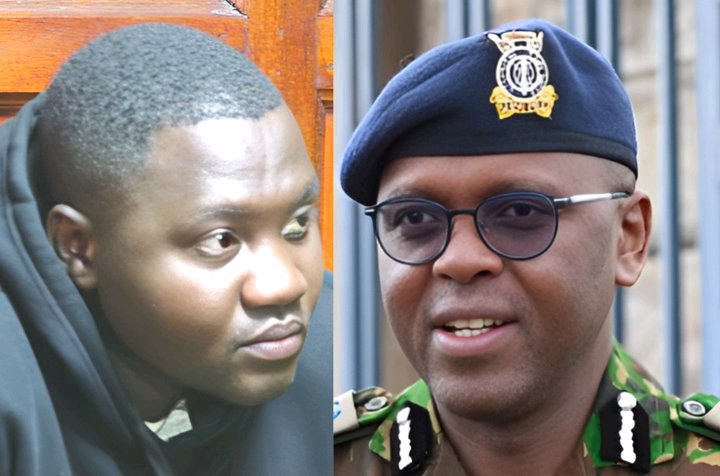
Fresh claims have emerged in the ongoing investigation into the death of Albert Omondi Ojwang after police officer Mukhwana reportedly changed his earlier account and alleged that Deputy Inspector General Eliud Lagat issued instructions before the incident that led to Ojwang’s death.
The allegations surfaced as investigations and court proceedings into the high-profile case continue to attract widespread public attention across Kenya. According to reports, Mukhwana gave investigators a new account in which he claimed that he had received directives from the senior police official before Ojwang died while in police custody.
The officer’s latest statement marks a significant shift from his earlier position and could become an important aspect of the prosecution’s case if supported by additional evidence. The exact nature of the alleged instructions and their relevance to the events surrounding Ojwang’s death are expected to be examined during the trial.
Albert Ojwang died while in police custody after being arrested and taken to Nairobi’s Central Police Station. His death sparked nationwide outrage, with human rights groups, political leaders, and members of the public demanding an independent investigation and accountability for those responsible.
Prosecutors have maintained that Ojwang was taken into custody alive and in good health before later being found dead. They argue that medical and forensic evidence contradicts the initial police account of how he died, alleging that he was fatally assaulted while under police protection.
The latest claims by Mukhwana are expected to add a new dimension to the case, particularly if prosecutors decide to rely on his testimony as part of the evidence presented before the court. Legal experts note, however, that allegations made by a witness or an accused person must be tested through cross-examination and supported by corroborating evidence before they can be accepted as fact.
The case has continued to raise questions about accountability within the police service and the treatment of suspects in custody. It has also renewed calls for transparency and reforms aimed at safeguarding the rights of detainees.
As the trial progresses, the court is expected to hear testimony from additional witnesses, including police officers, forensic experts, and medical professionals, to establish the sequence of events that led to Ojwang’s death.
At the time of publication, the allegations attributed to Mukhwana had not been proven in court, and the individuals mentioned in connection with the claims remain entitled to the presumption of innocence unless and until a court rules otherwise. The High Court is expected to evaluate all the evidence before reaching any conclusions on criminal responsibility.