

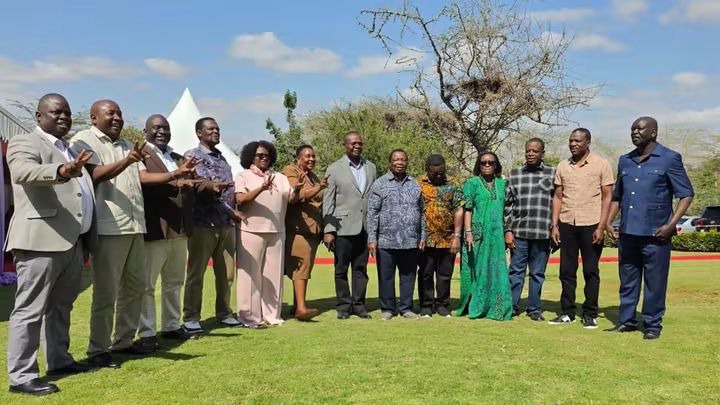
A meeting hosted by Central Organization of Trade Unions Secretary-General Francis Atwoli at his Ildamat home in Kajiado has attracted significant attention after bringing together a number of influential leaders from the Western Kenya region.
The gathering, which featured political leaders, professionals and other prominent figures, has sparked fresh debate about the region’s political direction and unity ahead of future national engagements.
Although details of the discussions were not immediately made public, the meeting was widely viewed as an opportunity for leaders from Western Kenya to consult on matters affecting the region and the country.
Such consultations have become increasingly important as political leaders continue to reposition themselves in preparation for the 2027 General Election.
Atwoli, who has remained one of Kenya’s most influential trade union leaders for decades, has often used his residence to host high level meetings involving political, business and community leaders.
His Ildamat home has become a familiar venue for strategic consultations on national and regional issues.
The latest gathering comes at a time when Western Kenya is experiencing increased political activity with leaders emphasizing the need for unity to strengthen the region’s bargaining power in national politics.
Discussions are also expected to have touched on economic development, infrastructure, employment opportunities for young people and strategies for ensuring the region remains influential in national decision making.
Political observers believe such meetings provide leaders with an opportunity to exchange ideas away from the public spotlight while building consensus on key issues affecting their constituents.
They also help strengthen relationships among leaders from different political parties who share common regional interests.
Atwoli has consistently called for dialogue and cooperation among Kenyan leaders, arguing that unity is essential for addressing the country’s economic and social challenges.
His influence extends beyond labour matters, making him a respected figure in national conversations involving governance and development.
The meeting has already generated widespread discussion on social media with many Kenyans speculating about its political significance.
However, participants have yet to issue an official statement outlining the resolutions reached during the consultations.
As the country’s political landscape continues to evolve, gatherings such as the one hosted by Atwoli are likely to remain closely watched.
They offer valuable insight into emerging alliances, regional priorities and the strategies leaders may adopt in the months and years leading up to the next general election.
For now, the Ildamat meeting stands as another reminder of the growing importance of regional consultations as Kenyan leaders seek common ground on the nation’s political and development agenda.